The short answer
Folding is a storage and transport decision, not a riding decision. A hinge buys you a smaller footprint and access to trains and boots. It does not make a bike lighter, faster or longer-legged, and on the evidence in our own catalogue it usually makes the bike heavier for the same job.
So work backwards from the two ends of your journey. If the bike is parked in a garage or a secure yard at home and a rack or locked store at work, there is no reason to pay for a hinge. If it sleeps in a hallway, goes up stairs, rides a train leg or lives in a hatchback, the hinge earns its money.
Weight: the part folding advertising skips
A hinge, a second set of frame tubes and a folding stem all add metal. Compare legal 250W machines from our own stock and the pattern is clear:
- Fiido X 2025 (folding, 250W, 15.5 mph): about 20kg, 81 miles claimed maximum range
- Fiido C21 (full-size, 250W, 15.5 mph): about 18kg, 62 miles claimed
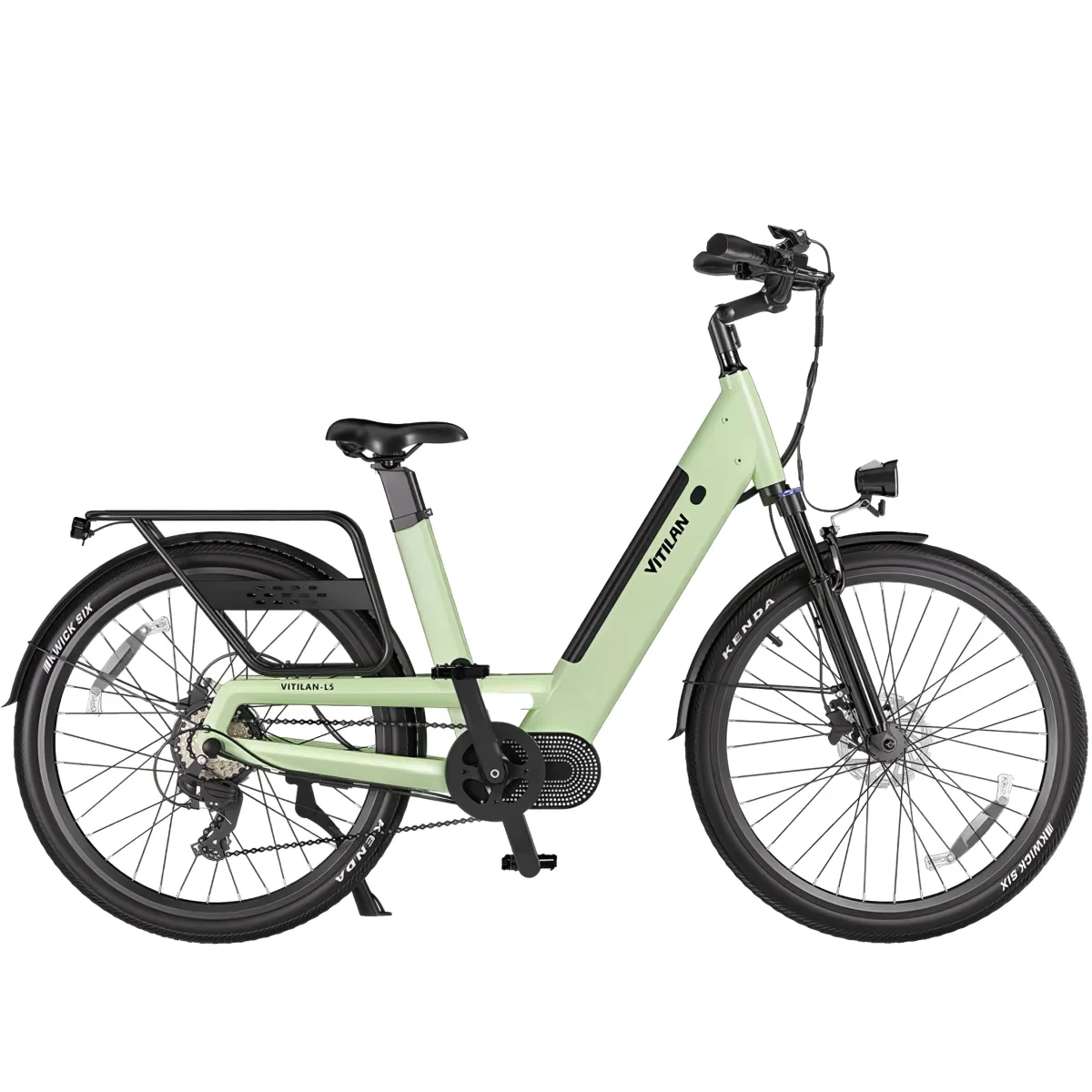
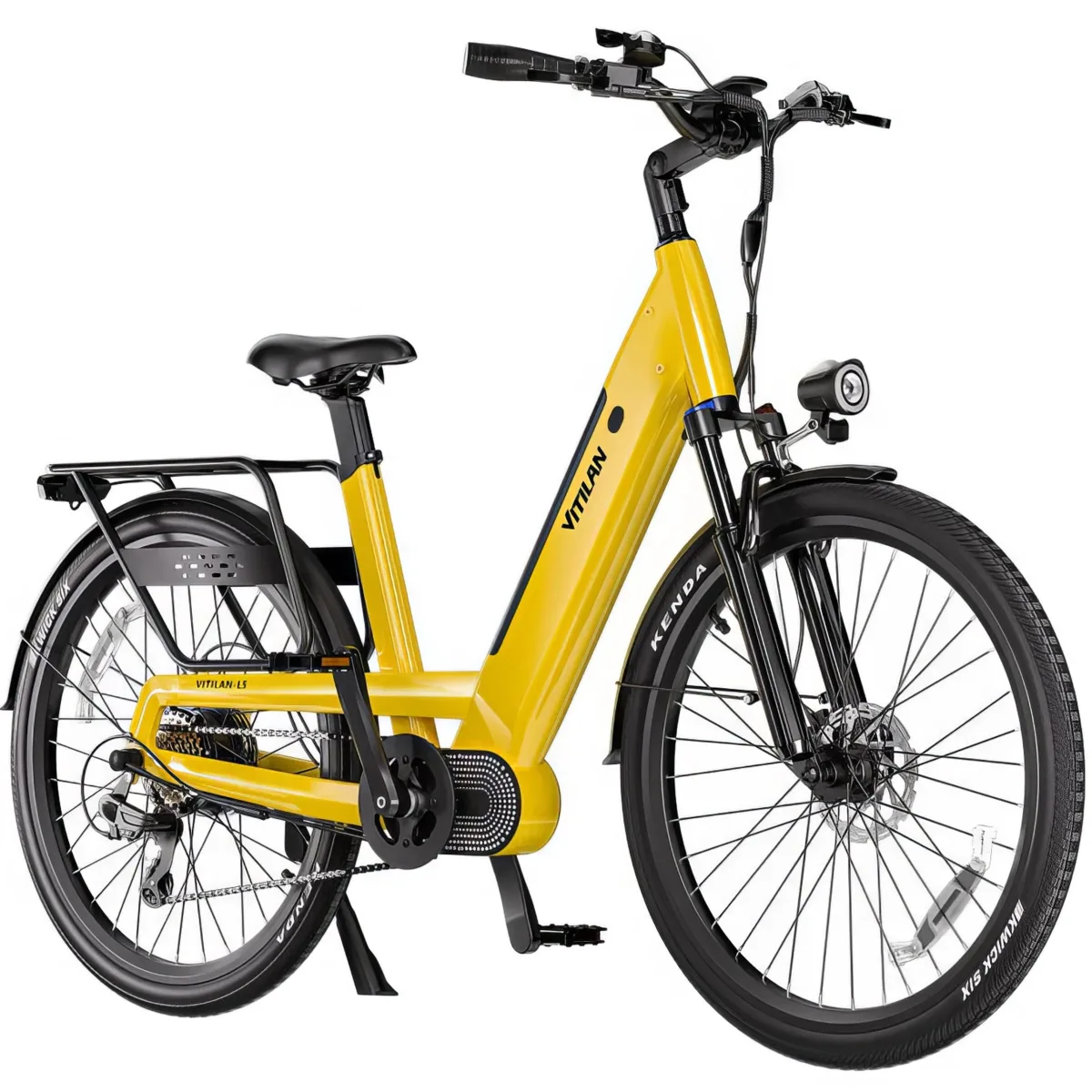
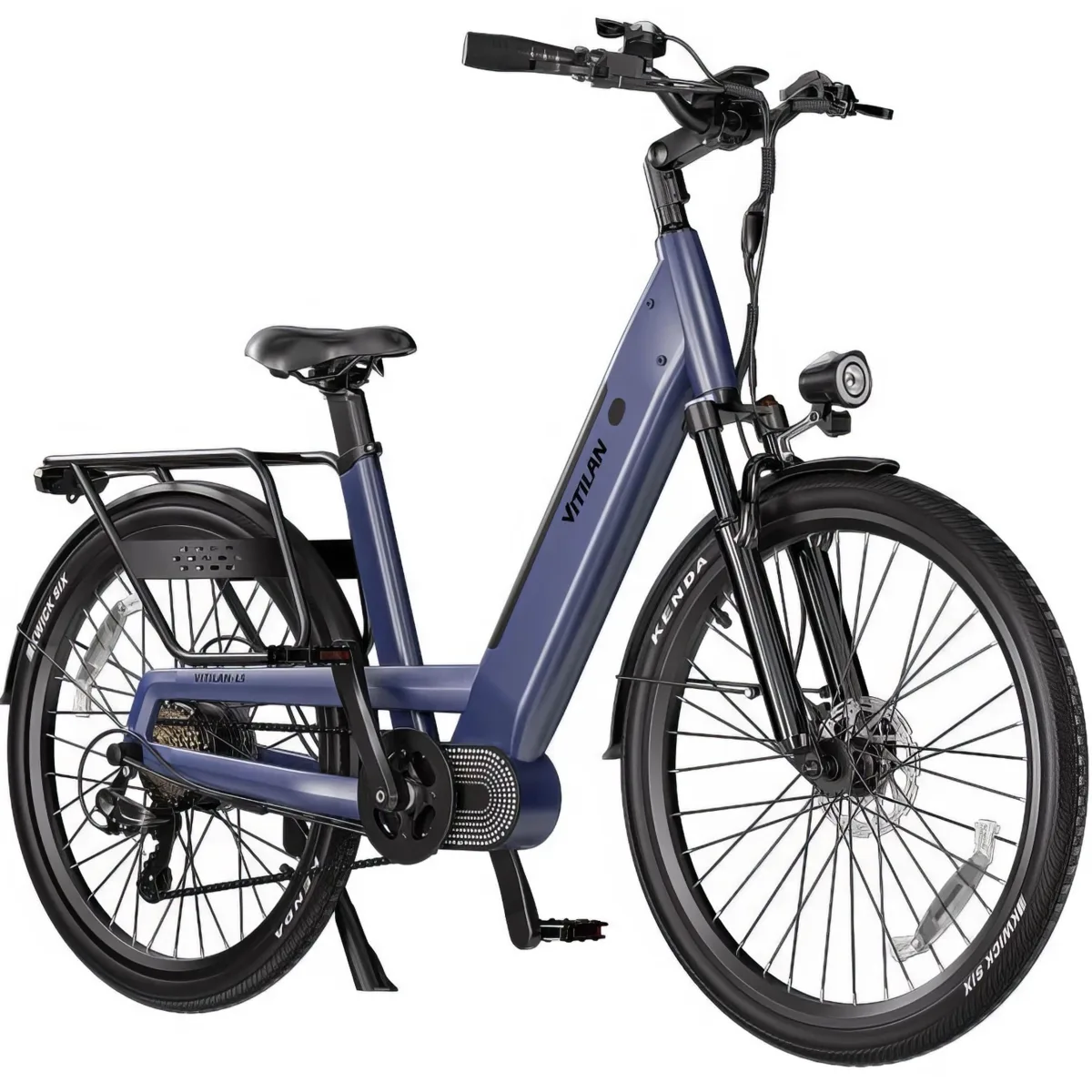
- Engwe P275 SE (full-size commuter, 250W, 15.5 mph): about 25kg, 62 miles claimed
- Engwe Engine Pro 3.0 Boost (folding, 250W, 15.5 mph): about 34.7kg, 80 miles claimed
That last one is the honest warning. A folding frame with a big battery can land above 30kg, and 30kg plus a folded awkward shape is not something you carry up a flight of stairs twice a day. Light folders do exist — the Fiido D3 Pro Mini sits around 18kg — but they carry a smaller battery and a shorter range. If you will genuinely carry the bike, check the weight on the product page before anything else, and weigh up whether you are lifting it or rolling it.
Train, boot and flat storage
On the railway, folding bikes are generally treated as luggage and full-size bikes are not: most operators restrict full-size cycles at peak times and some require a reservation. That single difference is why many London, Manchester, Leeds and Edinburgh commuters end up on a folder. Rules vary by operator and route, so check the one you actually use rather than trusting a general statement.
In a car, a folded 20-inch folder goes into a normal hatchback boot with the parcel shelf in place, and two will fit where one full-size bike fits. A full-size e-bike usually means dropping a rear seat, or a tow-bar rack that has to be rated for the bike's weight — e-bikes are heavier than the racks designed for pushbikes, so check the rating.
At home, a folded bike stands in a hallway or behind a door and takes the sting out of a flat with no lift. What it will not do is turn a first-floor flat with a narrow turn in the stairwell into an easy carry. Measure the folded size against the space you have.
Ride comfort, range and hills
Full-size wins on the road, and the reason is geometry rather than marketing. Larger wheels roll over potholes, drain covers and the general state of British back lanes better, a longer wheelbase is calmer at 15.5 mph, and the riding position spreads your weight instead of putting it all on your wrists. Over a 30-minute commute that is comfort. Over 90 minutes a day it is the difference between riding five days a week and riding two.
Hills favour full-size for the same reason: a longer, more stable bike puts power down cleanly on a climb, and the bigger contact patch keeps traction in the wet. A small-wheel folder can feel twitchy on a steep, greasy ascent.
Range is mostly battery, not frame. A folder with a big battery beats a full-size bike with a small one — the Fiido X's claimed 81 miles against the C21's 62 shows that. Treat every claimed maximum as a best case on flat ground in warm weather with a light rider in low assist, and expect less on a cold, hilly, loaded commute.
What neither option changes: the law
Whether it folds or not, an e-bike is legal on UK roads, cycle lanes and bridleways only as an EAPC: pedals, motor assistance cutting out at 15.5 mph and no more than 250W of continuous rated power. Both the folding Fiido X and the full-size Engwe P275 SE meet that. Many of the e-bikes in our catalogue do not — you will see 750W and 1000W models and machines listing 28 mph — and those are for private land with the landowner's permission, or for registration and road use where that applies. Do not buy a 30 mph folder expecting to commute on it legally.
No licence, no insurance and no registration is needed for a legal EAPC, and you can use the Cycle to Work scheme on one. That applies equally to folders and full-size bikes, so it does not settle the argument. Full detail sits on our Cycle to Work page.
Side by side
| Consideration | Folding e-bike | Full-size e-bike |
|---|---|---|
| Storage at home | Hallway, cupboard, behind a door | Needs floor space or a rack |
| Train | Generally treated as luggage; usually allowed off-peak and often at peak | Restricted at peak times on most operators, sometimes reservation only |
| Car boot | Fits a hatchback boot without dropping seats | Usually needs a seat down or a rated tow-bar rack |
| Lifting and stairs | Possible only with a light model; big-battery folders are 30kg+ | Rarely lifted; needs ground-level storage |
| Ride over potholes and wet lanes | Busier on small wheels | Calmer, more planted |
| Long or hilly commute | Fine up to about an hour; tiring beyond | The better tool for 90 minutes a day |
| Range | Set by battery size, not by the fold | Set by battery size, not by the frame |
| Legal status as an EAPC | Identical: 250W, 15.5 mph, pedals | Identical: 250W, 15.5 mph, pedals |
Choose folding if…
- You ride to a station, fold, and finish the journey by train — the single strongest reason to buy one.
- You live in a flat and the bike has to come indoors.
- Two bikes, or a bike and luggage, need to share one boot.
- You want a bike you can take away in a caravan or motorhome.
- You will actually check the weight and buy a light one, not the biggest battery on offer.
Choose full-size if…
- You ride the whole way, door to door, and the bike has somewhere secure at both ends.
- Your commute is hilly, or the surfaces are rough towpaths and broken lanes.
- You are doing more than an hour a day, or carrying shopping or a child seat.
- You are tall or heavy enough that a compact frame and 20-inch wheels feel cramped and nervous.
- Comfort matters more than storage, which is most riders once the bike lives somewhere sensible.
Where to look in our stock
The e-bikes shop lists every machine we deliver, filterable by type. For folders, the Engwe range has the Engine Pro 3.0 Boost and the EP-2 models, and the Fiido X and D11 are the light folding options. For full-size commuting, the Engwe P275 SE and the Fiido C21 are the straightforward ones to compare. One caveat on the Fiido C700: it is rated 350W, above the 250W EAPC limit, so treat it as private-land or registered use rather than a commuter you can legally ride to work.
Every order ships UK-wide for one flat £45, normally 3–7 working days, with a tracking link on dispatch. E-bikes go out with a two-person courier who arranges the day with you, to the ground-floor threshold. Full terms are on delivery and shipping, and there is a 14-day right to cancel with a full refund including delivery, extended to 30 days with a 25% restocking fee — see returns and refunds. Every new machine carries at least a 12-month manufacturer warranty.
Still torn between the two? Ring or WhatsApp us with your commute: distance, hills, where the bike sleeps and whether a train is involved. We will tell you which one to buy, including when the answer is the cheaper bike.