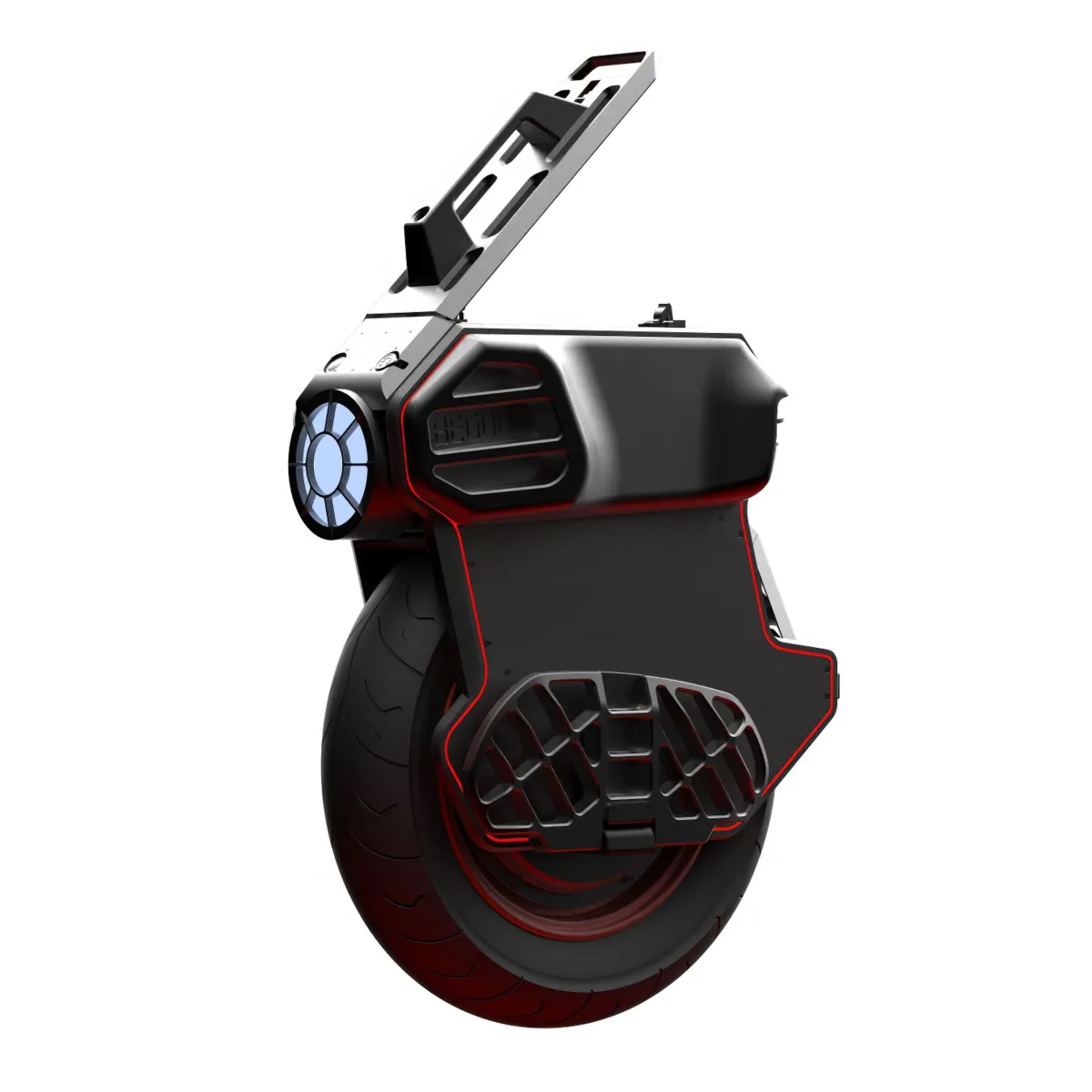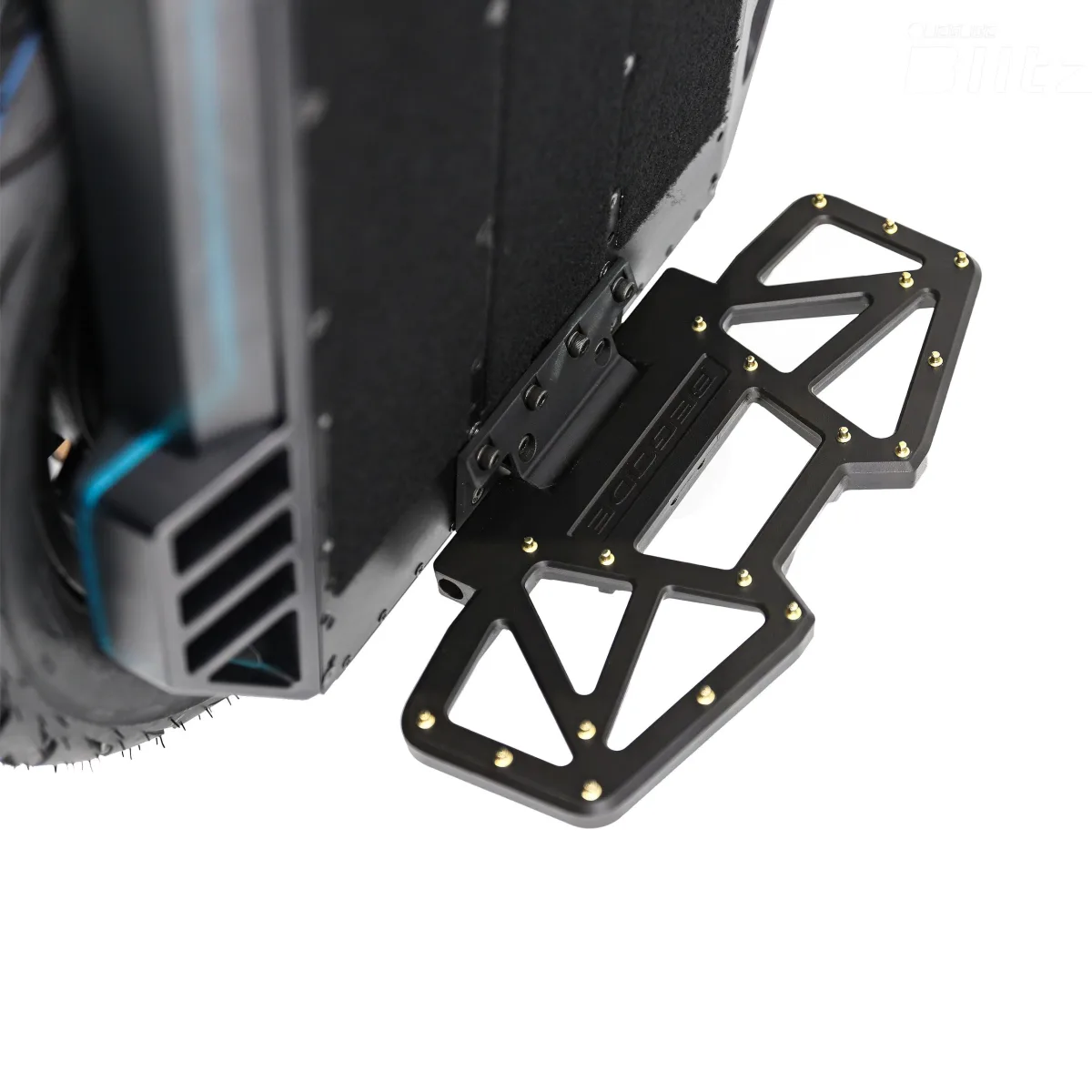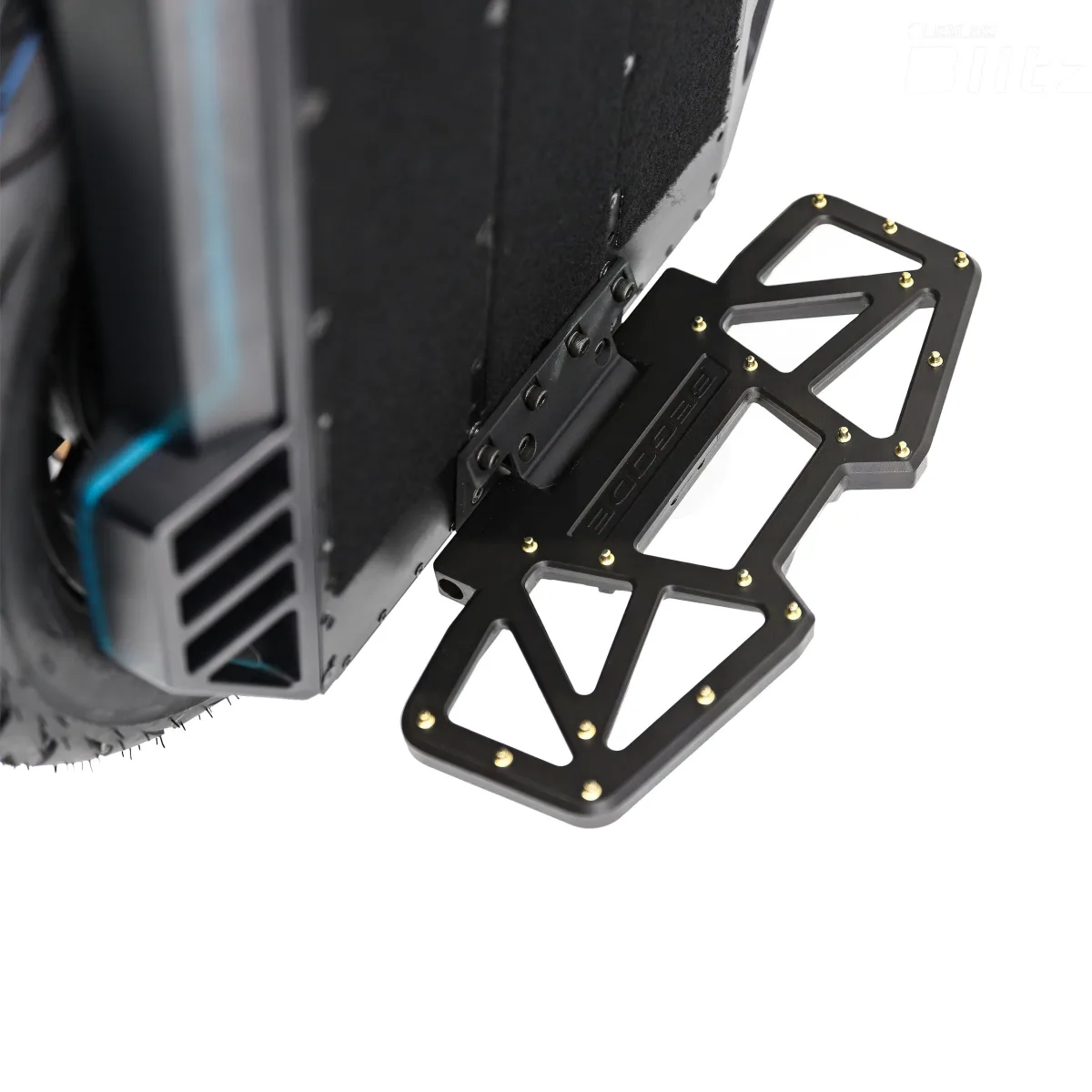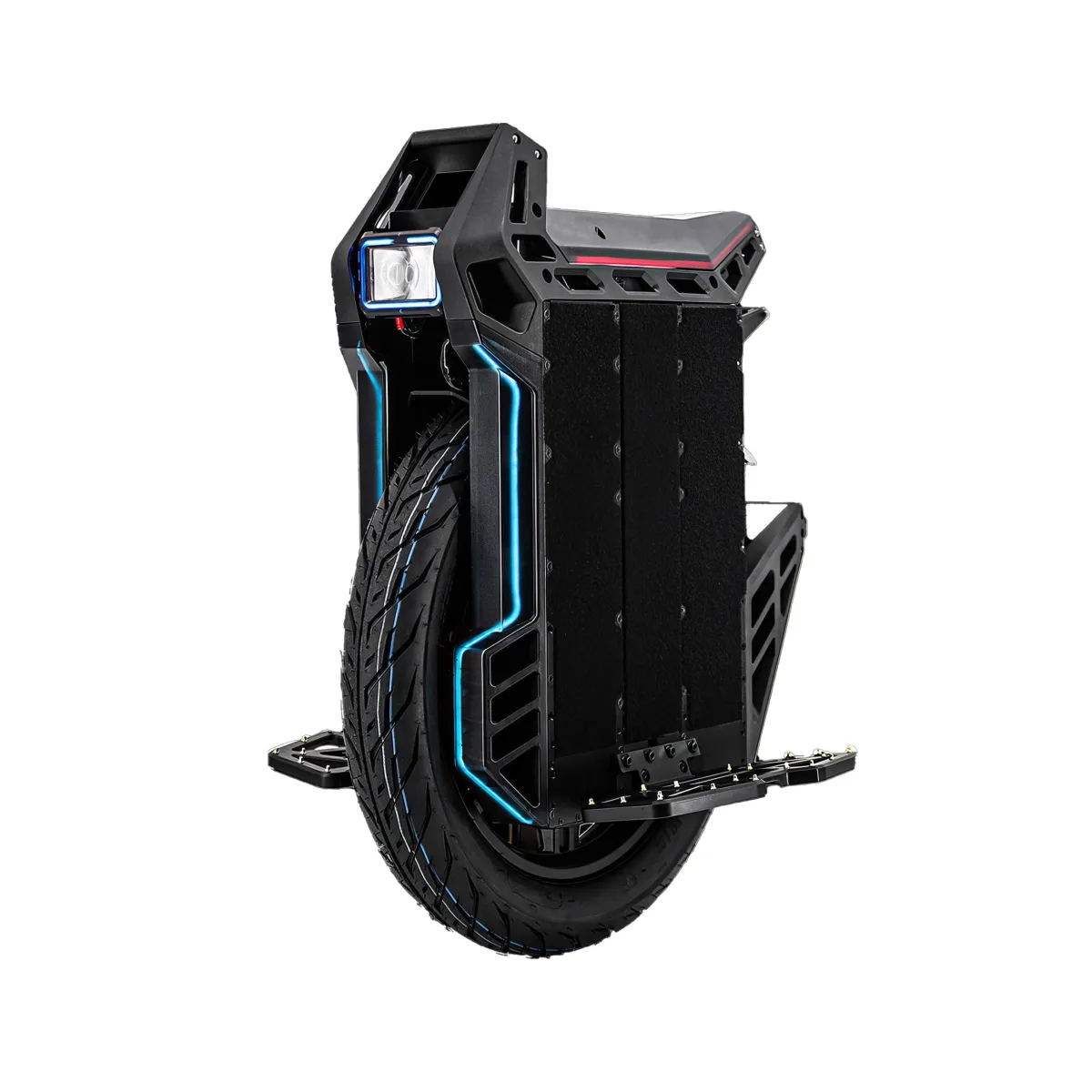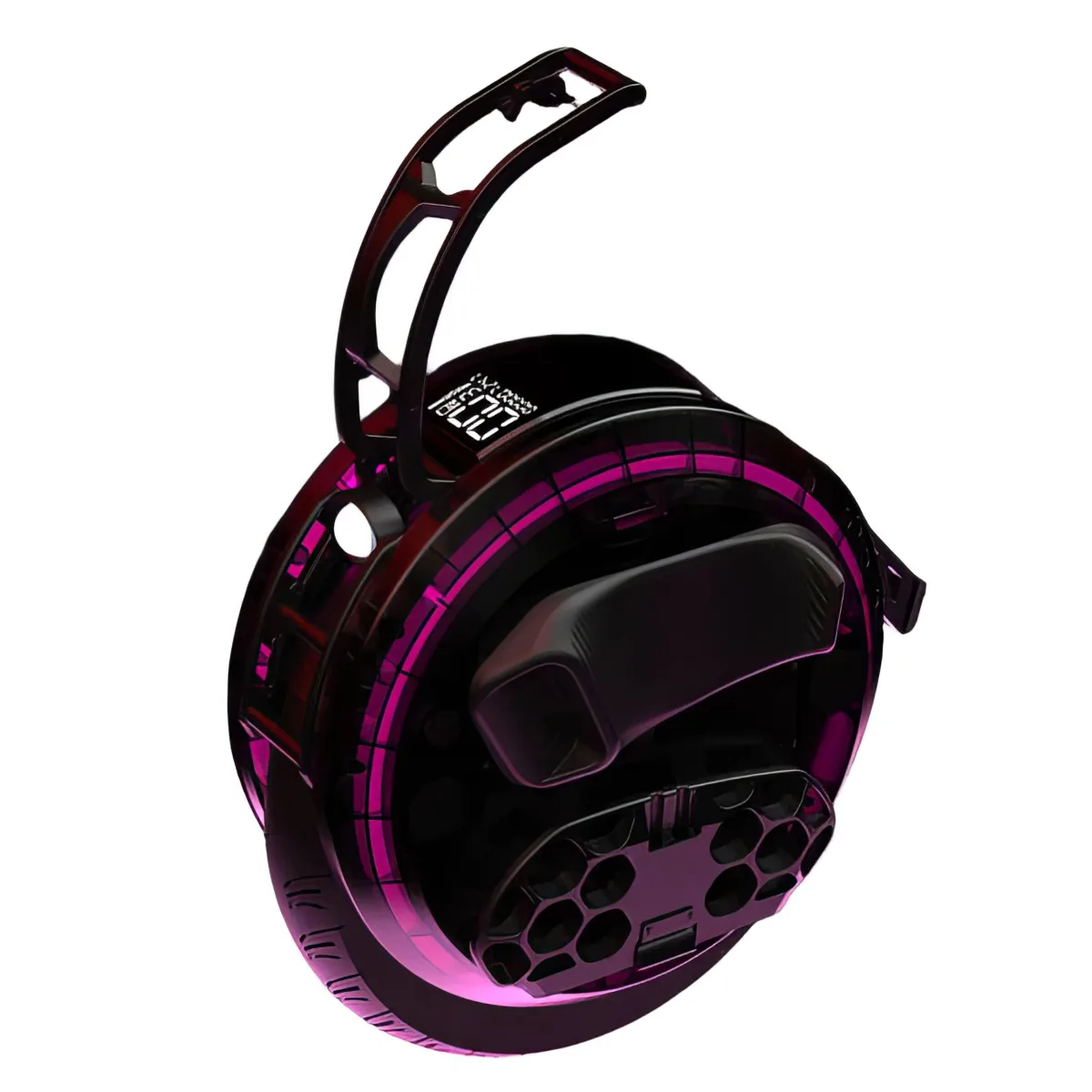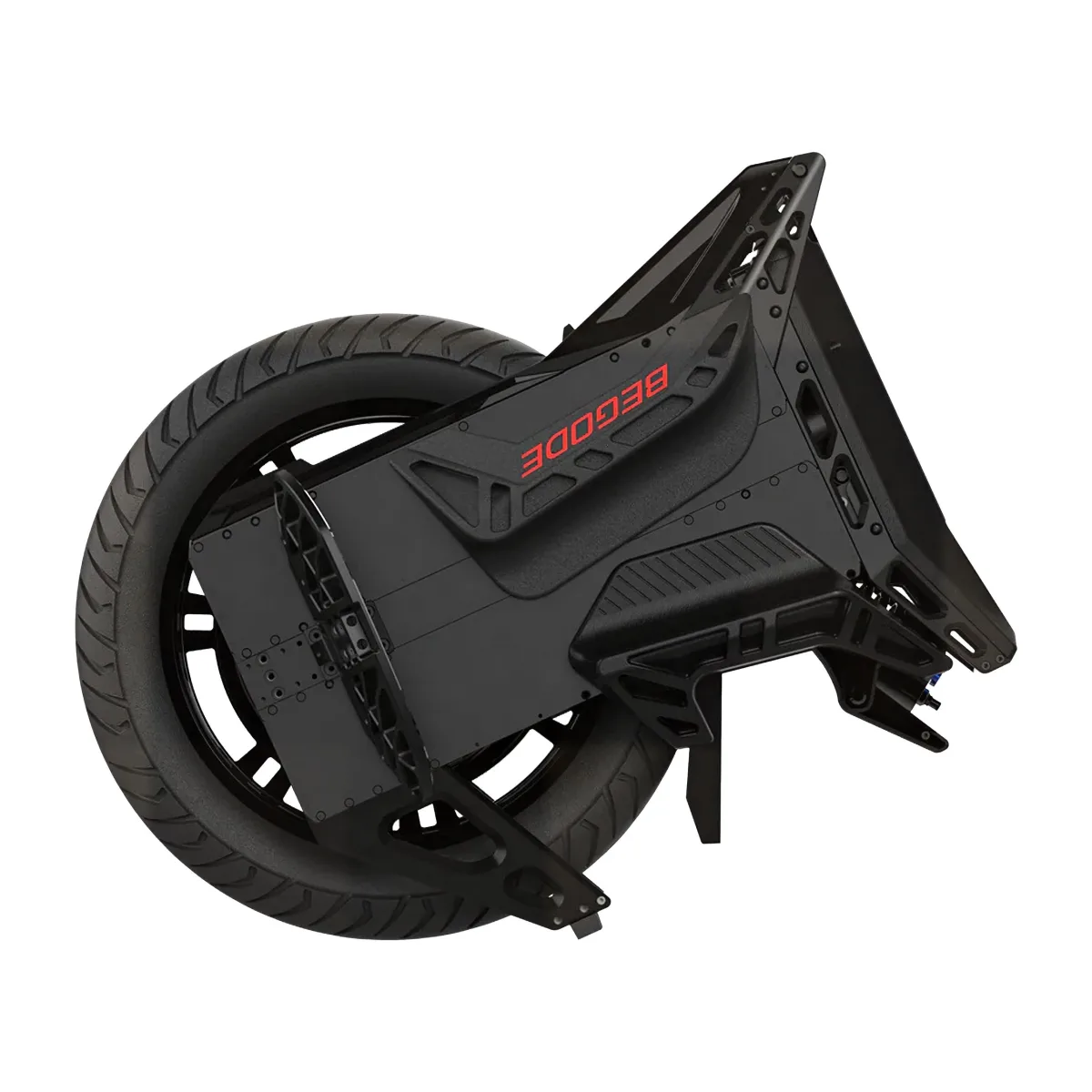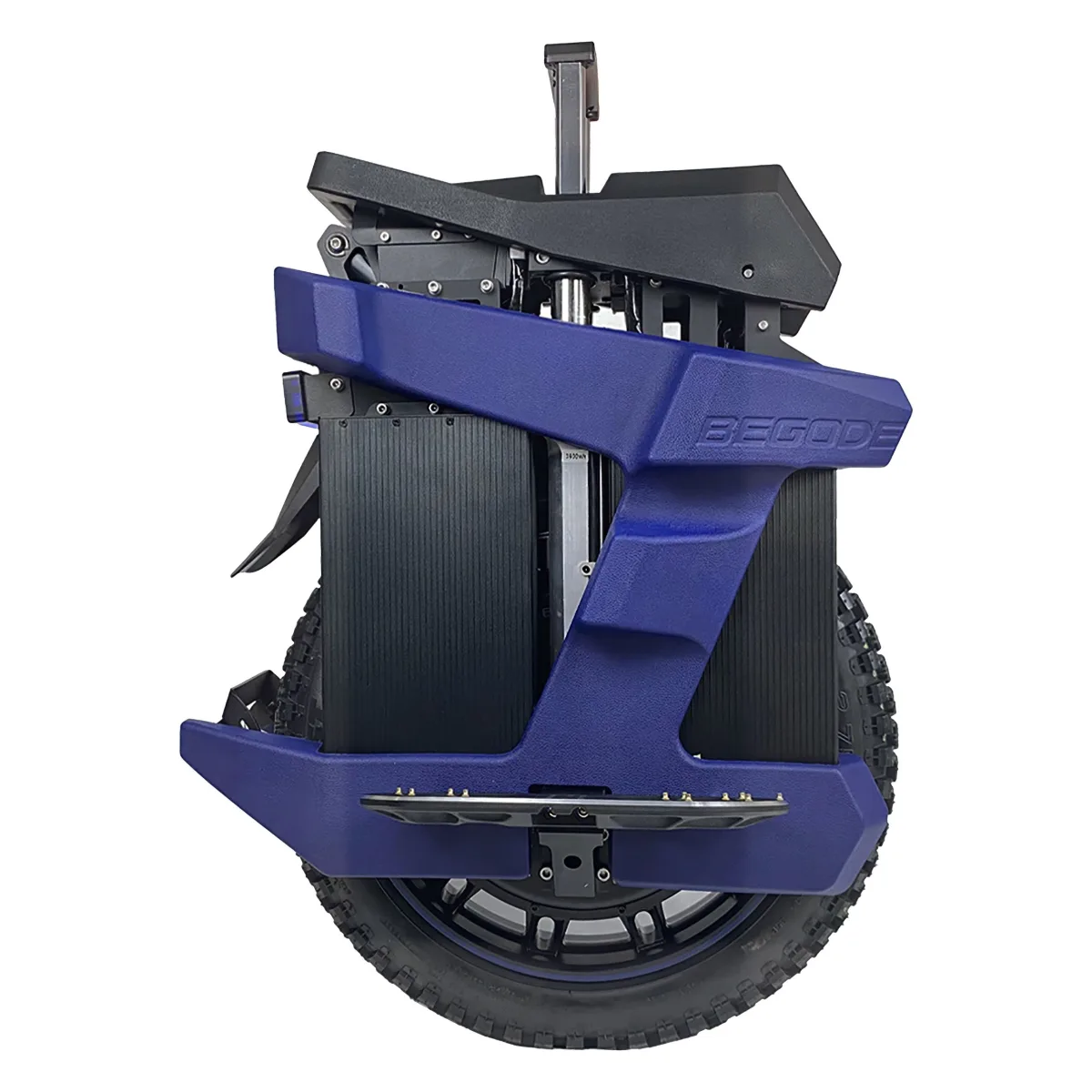
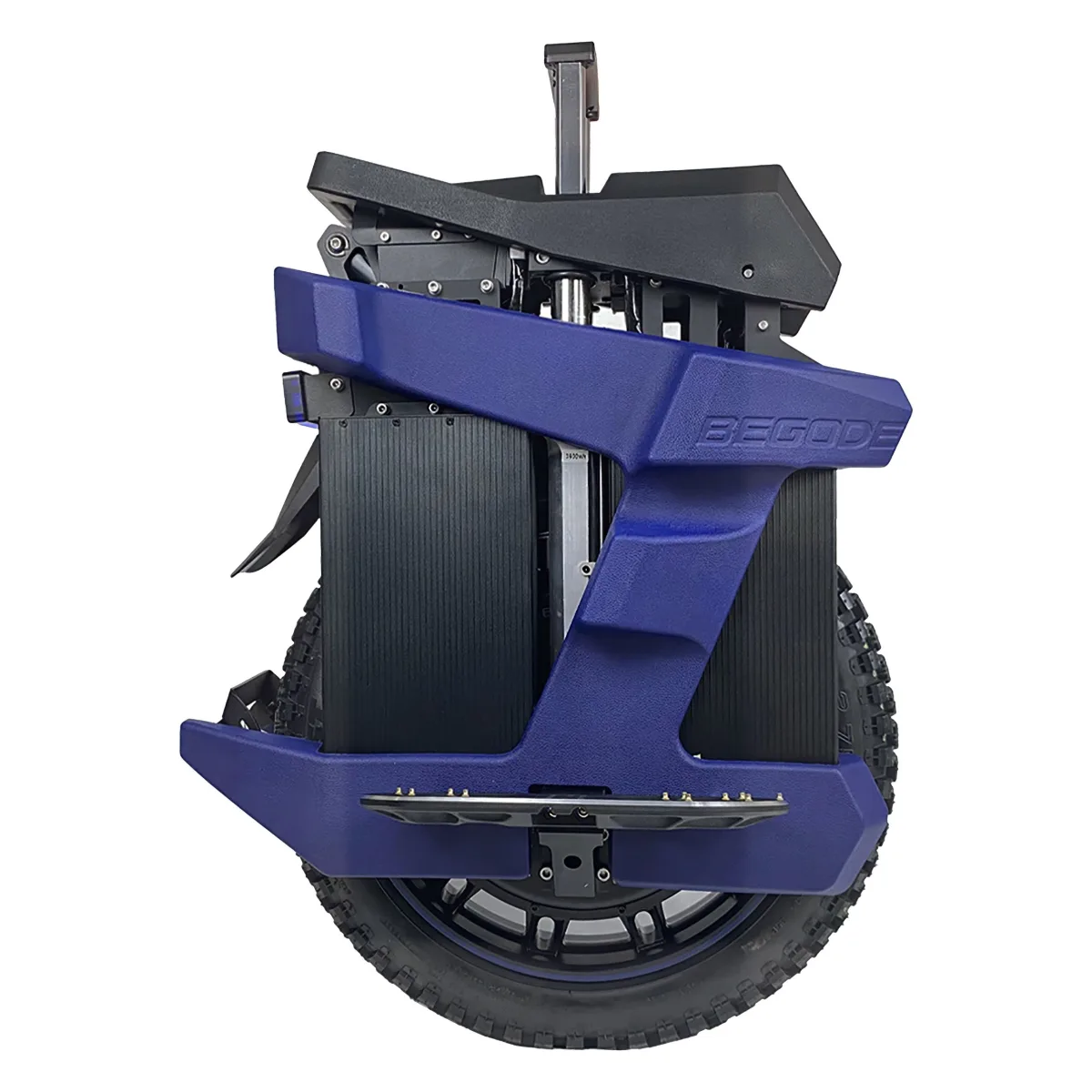
 Begode EX30 Electric Unicycle - 4000W Power | 26.8Ah Battery | 62mph Speed | 100mi Range — tap to view
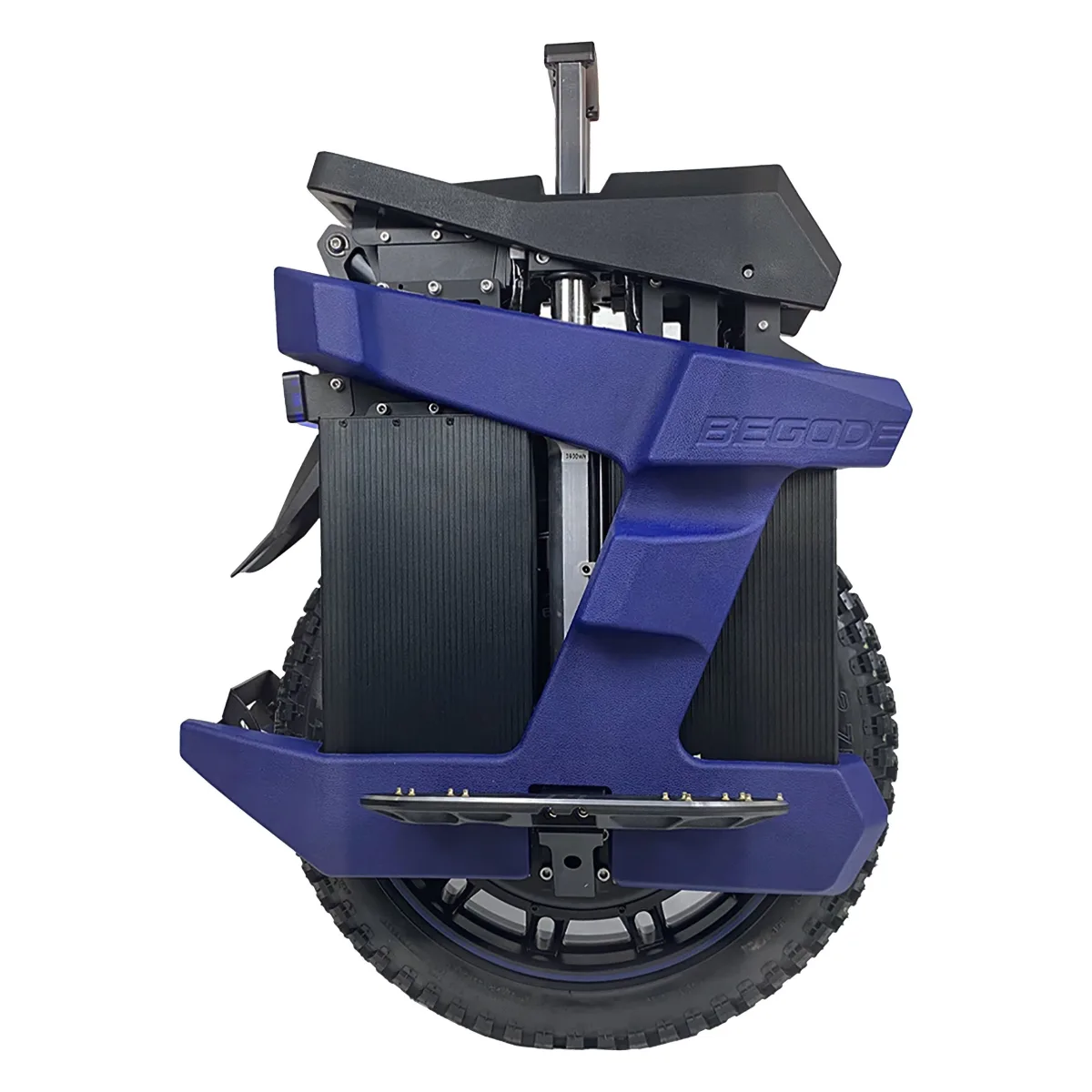 Begode EX30 Electric Unicycle - 4000W Power | 26.8Ah Battery | 62mph Speed | 100mi Range — tap to view
Why EUC falls happen
An electric unicycle is one wheel with no handlebar, no brake lever and no seat. You stay upright by leaning, and the wheel keeps you up by driving underneath your centre of mass. That is what makes it feel like flying, and it is also why the falls are forward and sudden rather than slow and sideways.
There are only three ways it goes wrong, and riders meet all three:
- A cutout. The wheel hits the limit of what it can deliver: a steep climb at walking pace, hard acceleration on a full battery, a battery near empty, or a pothole that spikes the demand. It stops balancing and you carry straight on over the front.
- Lost grip. Wet grass, gravel, mud, wet leaves on tarmac, painted lines in the rain, a kerb taken at a shallow angle.
- Foot slip. Worn grip tape or wet soles, usually at the mount or the dismount when you are least braced.
None of that is bad luck, and it does not stop happening once you are good. It is the normal failure mode of a single-wheeled machine. A heavy wheel at speed keeps going after it has parted company with you, which is the whole argument for dressing for the fall rather than for the ride.
The four things to buy first
1. A helmet that covers the back of your head
Look for a recognised standard on the label: EN 1078 for a cycle helmet, a downhill or motocross-style full-face for anything above about 20mph, and a motorcycle-standard (ECE 22.06) full-face if you are regularly up at 25mph and beyond. EUC falls often go backwards as well as forwards, so a helmet that ends above the base of the skull leaves the bit most likely to hit the deck unprotected. Fit beats features: measure your head, and a helmet that rocks when you shake your head is the wrong size. Replace it after any real impact.
2. Wrist guards, before anything else
The reflex in a forward fall is to put a hand out. Wrist guards with a rigid palm splint and support on both sides of the wrist are the difference between a bruise and a cast. Put them on before you step onto the pedals, not after the first wobble.
3. Hard-shell knee pads
Soft foam sleeves are for comfort on a pushbike. You want a hard plastic cap over the kneecap with a strap above and below the knee so it cannot rotate out of place, and on bigger wheels get the version with a shin extension. Knees and shins take the first contact in a forward fall.
4. Elbow pads
Same logic as the knees: hard cap, two straps, stays where you put it. Cheap ones slide up your arm the moment you need them.
Then the cheap fixes: flat-soled shoes with the laces tucked in, no sandals, no bare shins, and a pair of gloves if your wrist guards leave your fingers exposed.
Match the gear to the wheel
Gear that is adequate for a 13kg learner wheel is not adequate for a 33kg performance machine, and the difference is speed and mass, not price.
| Wheel | What it is | Wear |
|---|---|---|
| Begode A1 | 800W, 12mph, 13kg | Cycle-standard or full-face helmet, wrist guards, knee pads |
| Begode A2 | 1000W, 25mph, 19.2kg | Full-face helmet, wrist guards with splints, hard-shell knee and shin pads, elbow pads, gloves |
| Begode T4 Max | 3000W, 35mph, 33kg | Motorcycle-standard full-face, full knee, shin, elbow and shoulder protection |
The other thing the weight tells you: 33kg is a lift with two hands and a straight back, not something you carry up a flight of stairs every day.
Why the law changes what safety means here
In the UK a privately owned electric unicycle may not be used on public roads, cycle lanes or pavements. It is not an EAPC, it has no registration or insurance route, and a government rental trial is not permission to ride your own machine. The only lawful riding is on private land with the landowner's permission: a field, a track, a private car park, a farmyard.
That has two practical consequences. First, ask before you ride, every time, and know whose land you are on. Second, your gear needs to cope with grass, gravel and mud rather than kerbs and traffic, which is exactly where grip disappears without warning.
Visibility is about you, not the wheel
The LEDs on an EUC sit at ankle height. In long grass, behind a hedge or over a rise they vanish, and drivers and dog walkers are not looking down there. Wear something reflective at chest or pack height, and put a small light on your helmet or rucksack if you are out at dusk. Fluorescent yellow works in daylight; reflective strips and a light are what work after dark.
Check the ground as well as the sky. Wet leaves on tarmac are as slippery as ice, wet grass holds water and loses grip on any slope, and mud will pack into a tyre until it stops gripping at all. The day after heavy rain is the worst day to test a new surface.
What not to buy
- Helmets with no standard marking, or a hard shell over a thin foam liner.
- Secondhand helmets. You cannot see the impact that already compressed the foam.
- Soft fabric knee sleeves sold as protection.
- Pads that loosen when you shake your arm or leg. If it moves, it will not be there when you land.
- Gloves on their own. They protect the palm, not the wrist joint.
Before the first ride
Check tyre pressure, pedal grip tape, pedal and battery charge, and the alarm and tilt-back settings, which are the wheel's own warning system and the reason a cutout is usually preceded by beeping and a pedal tilt you should not ignore. Learn on smooth, flat, private tarmac with something to hold at first, keep the speed low, and have someone with you and a charged phone in your pocket while you find your feet.
We sell the wheels, not the pads: buy helmets and armour from a riding-gear specialist and check the standard marking before you pay. Every electric unicycle in the range, from Begode, Kingsong, InMotion, Leaperkim and the rest, is listed in the EUC shop, and ships to any UK address for a flat £45 in 3–7 working days. Ring or message before you order and we will tell you honestly which wheel suits the ground you actually have.