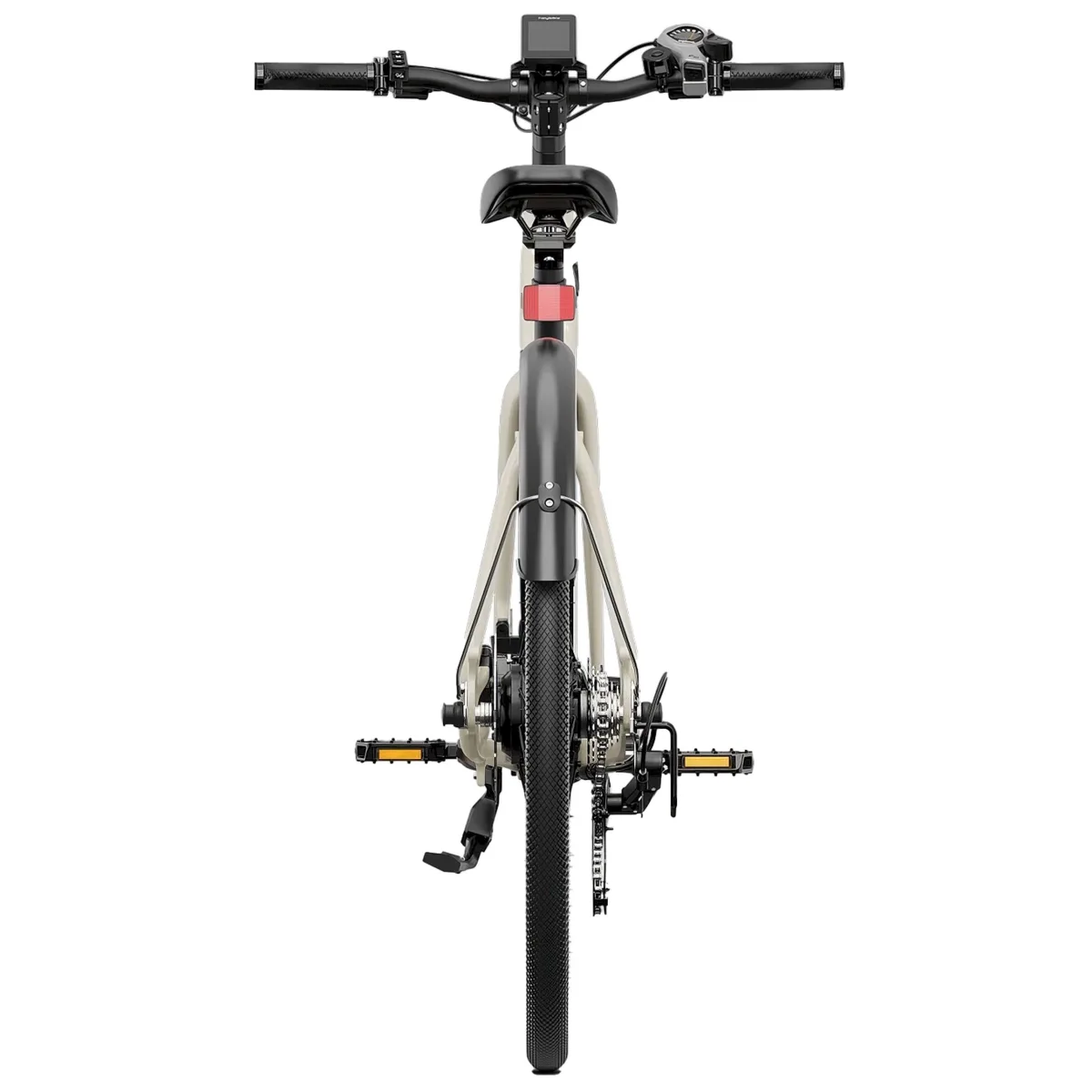
What the sensor actually measures
A torque sensor sits in the bottom bracket or the rear hub, where it measures the twisting force, or torque, going through the cranks. It reads that force many times a second and passes the figure to the motor controller. The controller then adds a proportional amount of power, usually set by the assistance level you have chosen on the handlebar display.
The key word is proportional. A light push on level ground in a low setting draws a little help. The same rider standing on the pedals up a 10% hill gets noticeably more. You are still doing real work, just with the effort scaled down.
Torque sensor vs cadence sensor
A cadence sensor is the simpler system. It detects that the cranks are turning and switches the motor on at the power level selected. It does not know or care whether you are pushing hard or just spinning the pedals round.
The difference shows up most on gradients and at low speed:
- Cadence: the motor gives the same help whether you are cruising or grinding up a hill, so a steep climb means you change down and put in the effort anyway. Pulling away from a standstill can feel like the bike surges forward once the pedals move a few degrees.
- Torque: assistance rises as your effort rises, so the start is smooth and a hill feels like a lighter version of the same hill. It also means the bike feels like a normal bicycle with your legs upgraded.
Neither is a quality marker on its own. Cadence systems are cheaper, simple and perfectly usable on flat commuting. Torque systems cost more and are what most riders prefer once they have tried both, especially if they ride hills, carry loads or have knees that complain.
Why it feels natural on hills, within EAPC limits
The natural feel comes from the fact that the sensor reports your effort, not your speed. The motor responds to you, so there is no delay and no lurch, and you keep control of the gear you are in and the pace you are setting.
None of that changes the law. A torque sensor is a way of delivering assistance, not a way of getting round the rules. A legal e-bike in the UK is an EAPC: motor assistance must cut off at 15.5 mph and the motor must be rated at no more than 250W continuous, with no throttle unless it is a walk-assist function. Those limits are set by the motor and controller, so a torque sensor on a 250W bike is legal on the road, and a torque sensor on a 750W bike is not. If you are unsure whether a particular model counts as an EAPC, read our electric bikes pages carefully or ask us before you order.
What it means when you are choosing a bike
Two things are worth checking on the spec sheet.
First, the wording. Sellers describe the same thing as a torque sensor, a torque-based pedal assist or a pedal force sensor. Some list "torque sensor" under a general sensor or style field rather than in the drivetrain spec, so read the whole listing.
Second, whether the rest of the bike matches. A torque sensor on a folding commuter and a torque sensor on a fat-tyre 750W machine are the same component doing very different jobs. In our own catalogue, the Fiido D11 2025 folding e-bike has a 250W motor, a 15.5 mph cut-off and a torque sensor, so it is a legal EAPC with the natural feel. The Himiway D5 also has a torque sensor but runs a 750W motor with a 1200W peak and a 28 mph top speed, which puts it outside the EAPC limits: it is a private-land machine, not a road commuter. Same sensor, entirely different legal position.
If most of your riding is a flat four-mile commute, a cadence sensor will do the job and save you money. If you are climbing, carrying shopping or doing longer distances, the torque sensor is the part you will notice every single ride.
Telling them apart before you buy
You cannot see either sensor from the outside, so use the spec and, if in doubt, ask. A quick test if you ever get the chance to ride one: on a cadence bike, the motor's help feels the same at any pedal pressure in a given setting. On a torque bike, pressing harder through the pedals immediately gives more help. Ask us which models in the range have which, and we will tell you straight, including when the cheaper option is the right one for your ride.