The sum: volts times amp-hours
Watt-hours are simply the pack's voltage multiplied by its capacity in amp-hours. A 48V battery rated at 15.6Ah holds 48 × 15.6 = 749Wh. That is the whole calculation, and it is the number worth comparing.
Amp-hours on their own only make sense at a stated voltage. An amp-hour is a measure of charge flowing at a given pressure; a watt-hour is the actual energy that flow represents. Raise the voltage and the same amp-hours deliver more energy, so putting "20Ah" next to "15Ah" tells you nothing until you know what voltage each pack runs at.
Two real packs, side by side
Both of these are in our catalogue, and the difference is exactly why we quote Wh rather than Ah:
| Pack | Capacity | Voltage | Energy |
|---|---|---|---|
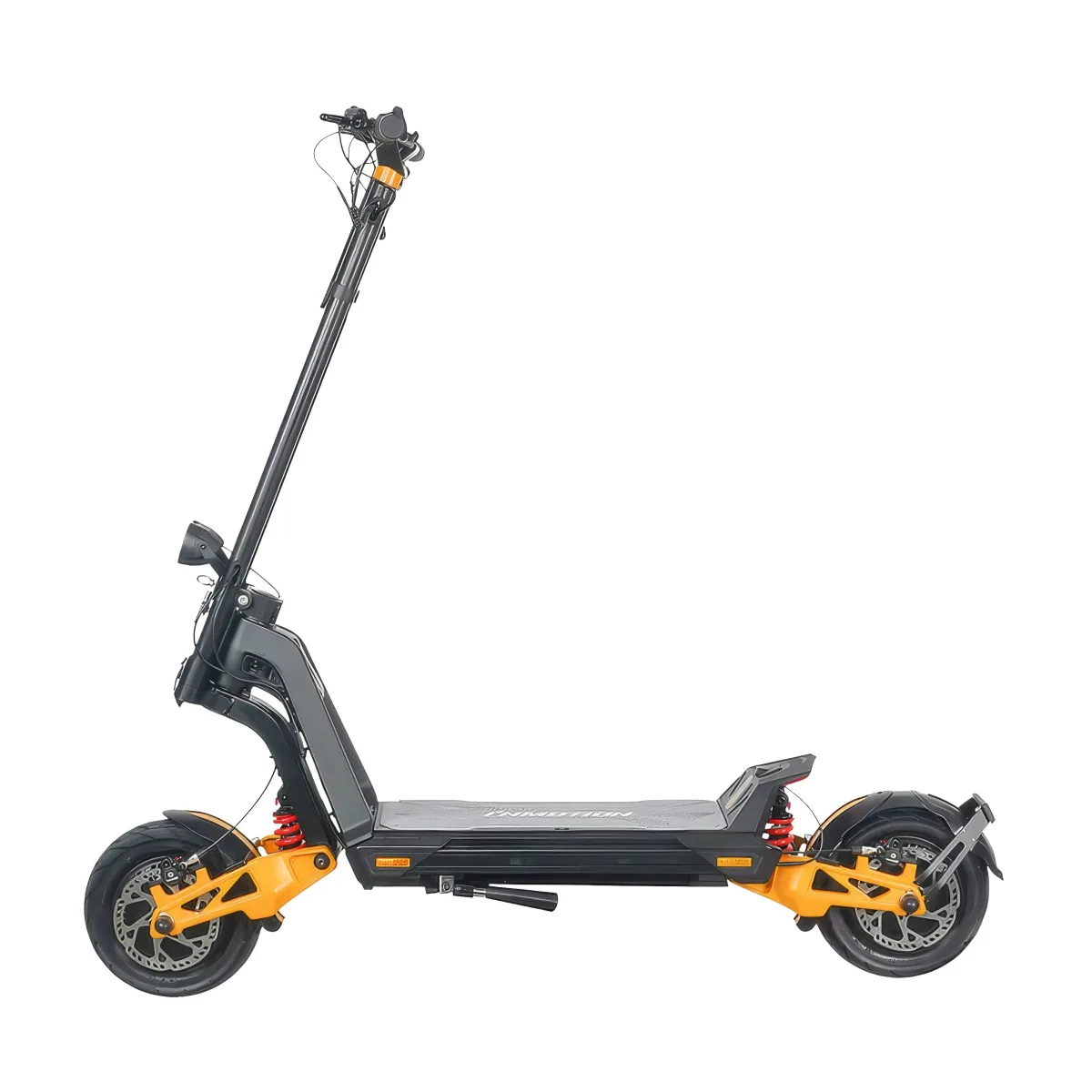
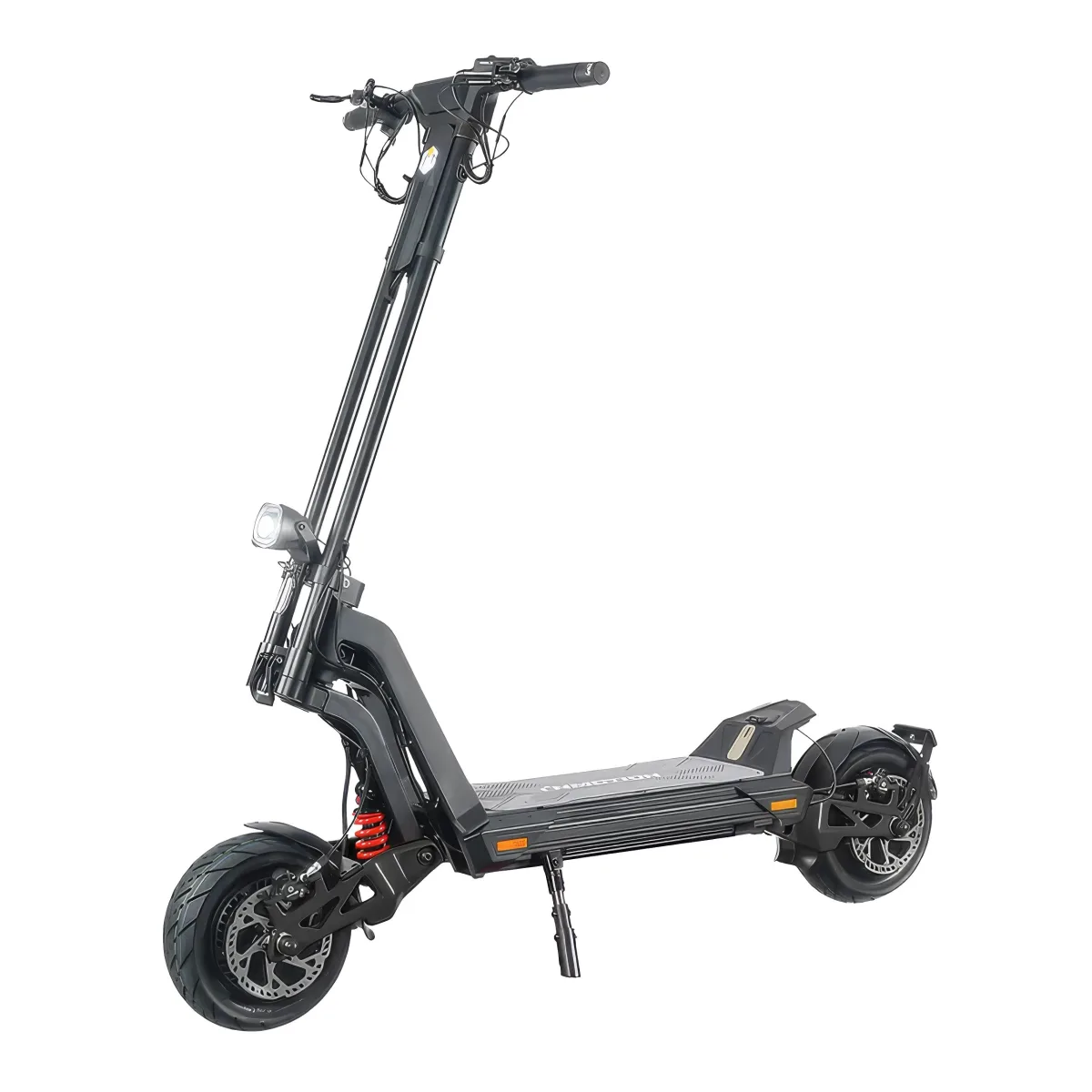
| Circooter Landturbo Pro | 15.6Ah | 48V | about 749Wh |
| KuKirin G4 | 20Ah | 60V | 1,200Wh |
Only 4.4Ah separates them on paper, but the KuKirin carries roughly 450Wh more energy. Most of that gap comes from the higher voltage, not the extra amp-hours. At the same voltage, Ah does the job: the Circooter M2 at 12.5Ah and 48V is 600Wh, the Circooter R3 at 15Ah and 48V is 720Wh, and the pack with more amp-hours genuinely has more energy.
Where watt-hours help, and where they stop
Wh is the honest measure of how much work a battery can do. Divide it by the power you are drawing and you get running time: a 1,200Wh pack feeding a 1,000W motor is about 1.2 hours of flat-out running. That is arithmetic, not a range prediction — you will never hold peak power for a whole ride, and the figure says nothing about how far that time carries you.
What Wh does not tell you is range. Range is set by the energy in the pack and then eaten into by rider weight, hills, headwind, tyre pressure, cold weather, and how fast you actually ride. Manufacturers publish a "maximum range" figure measured in the best conditions available — light rider, warm day, flat ground, low assist or low speed. Treat it as a ceiling, not an expectation. We would rather tell you that than promise a number we cannot stand behind.
The bands you will see in the catalogue
- Roughly 600–750Wh: folding commuter scooters around 21–27kg, such as the Circooter M2 and Landturbo Pro. Lighter to lift, cheaper to buy, and the sensible choice if you carry the scooter up steps or onto a train.
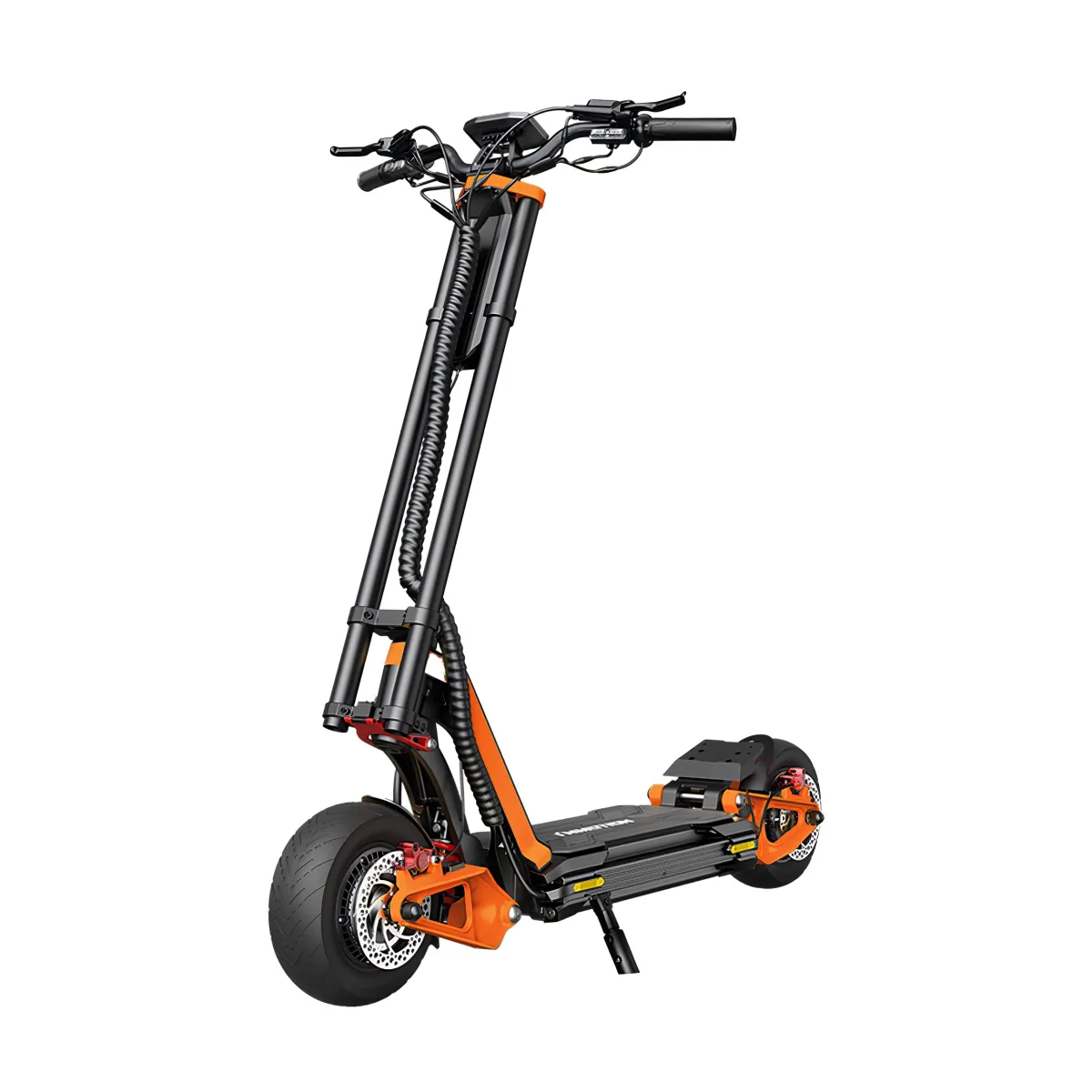
- Roughly 1,200–1,650Wh: the performance middle ground — KuKirin G4 at 1,200Wh, Dualtron City New at 1,500Wh, Kaabo Wolf Warrior X Max at 1,620Wh. Bigger packs, more weight, more money.
- Roughly 2,100–3,600Wh: full-size dual-motor machines. The Kaabo Wolf Warrior 11 MAX at 2,160Wh weighs about 56kg; the Teverun Tetra at 3,600Wh weighs about 83kg. These are not scooters you fold and carry.
The weight is the trade-off nobody mentions. Cells are heavy, so capacity and kilos climb together. If the scooter has to go in a car boot or up a flight of stairs every day, a 600Wh pack you can actually lift beats a 2,400Wh pack you leave in the hall. Charging time climbs with capacity too — the Nami Blast Max, at 40Ah and 60V for about 2,400Wh, is quoted at 7.5 hours on its charger.
Watt-hours on an e-bike
The same sum applies. A 36V, 12Ah battery, which is typical of a legal commuter e-bike such as the Hitway BK19, is about 432Wh; the BK27S at 13Ah and 36V is about 468Wh. E-bike packs run at lower voltage than performance scooters and hold less energy, but the motor draws far less, which is why a modest pack still covers a commute.
On e-bikes, watt-hours are not the only thing that matters — the law is too. A road-legal EAPC needs a motor of no more than 250W continuous rated power and assistance that stops at 15.5 mph. Some bikes in our catalogue sit above that limit and are for private land or registered road use only. If you are buying to commute on UK roads, check the spec or ask us before you order. See the e-bike range.
Reading the label before you buy
- Find both figures: the voltage and the amp-hours. Voltage is usually on the charger, the battery label, or in the model code.
- Multiply them. That is your Wh, and it is directly comparable across any two machines.
- Expect a little less in practice. The label quotes the pack's nominal capacity, and cold weather and age both take a bite.
- Then weigh it against the weight. A pack you can lift and charge indoors gets used; one that does not, sits.
Two more points that watt-hours do not change. A privately owned e-scooter cannot legally be ridden on UK public roads, cycle lanes or pavements — only on private land with the landowner's permission — and no battery size alters that. And if you are unsure whether a pack suits your ride, ring or message us with the voltage and Ah you are looking at and we will do the sum with you before you spend anything.