What registration actually means
Registering a Class 3 scooter puts it on the DVLA's records and gets a V5C log book issued in your name — the same document a car has. gov.uk is clear that it is compulsory for a Class 3, and for any mobility scooter that falls outside the two classes altogether. It is not a licence, it is not a tax disc, and it is not insurance. It is proof that the machine on your drive is the machine that is registered, which is also what you need if you ever sell it on.
Once the scooter is registered with the DVLA as a mobility scooter, no vehicle tax is due. A driving licence is not needed for a Class 3 either — that requirement only applies to machines that are not in a class at all.
Who registers it, and how long the log book takes
A dealer will usually register a brand new scooter for you, according to gov.uk. If it is not done for you, you register it yourself on form V55/MV, and the V5C arrives in the post within four weeks of the sale. On a used machine the log book can take up to six weeks.
So ask the question at the point of sale: who registers this, and does the V5C come to me? It is a two-minute question before you order and an awkward one after a 150 kg road scooter has been left at your threshold. If the V5C never turns up, gov.uk's route is an application for a vehicle registration certificate (form V62) sent to DVLA in Swansea.
Buying used: it should already be registered
A used Class 3 scooter should reach you already registered. Ask the seller, or check the registration number yourself on the DVLA's vehicle enquiry service. If it is not registered, you can register it yourself on form V55/MV — but find out before money changes hands, because until it is registered the machine cannot legally be used on the road.
Refurbished rides in the catalogue include mobility scooters, and each one states its condition and its warranty period on the product page. The same registration rule applies to them: a used Class 3 should already carry a V5C.
What registration does not do
- It does not make the scooter legal everywhere. Motorways and bus lanes are out for every mobility scooter, and so are cycle lanes painted on the carriageway. Cycle tracks separated from the road by a barrier or distance are fine.
- It does not lift the pavement limit. A Class 3 does 8 mph on the road and 4 mph on pavements, and it has a switch or mode for pavement use. The 8 mph figure applies to the road only.
- It does not replace insurance. Insurance is not a legal requirement for a Class 2 or Class 3, but it is recommended for a machine sharing a road with cars.
- It does not change who may use the machine. Under the gov.uk rules you can only use a mobility scooter if you have trouble walking because of an injury, physical disability or medical condition, or for one of the narrow exceptions — taking it for repair, a manufacturer testing it, a dealer demonstrating it, or training a disabled user.
Which scooters need it, and the ones that fall outside the classes
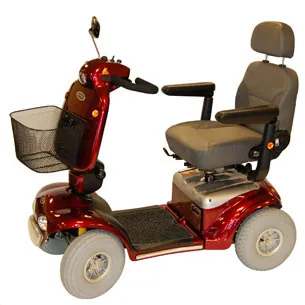
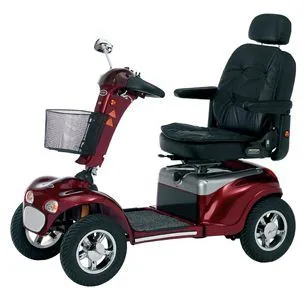
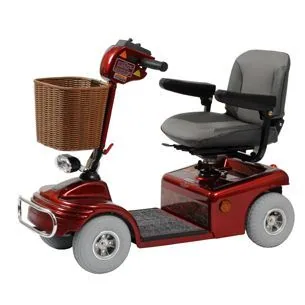
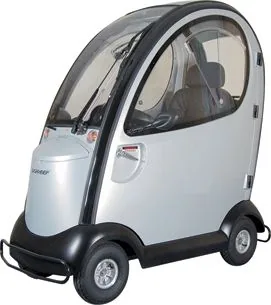
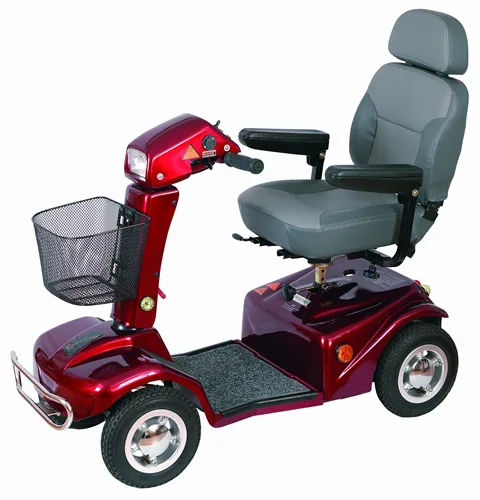
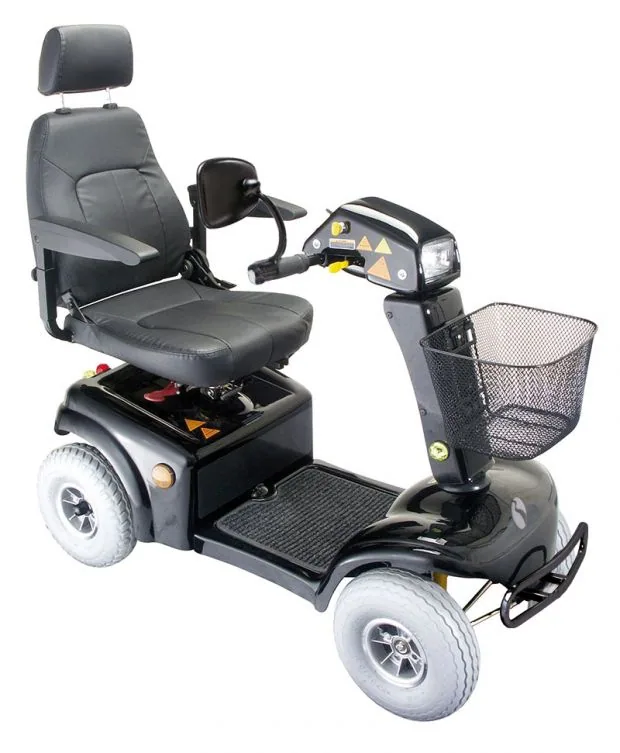
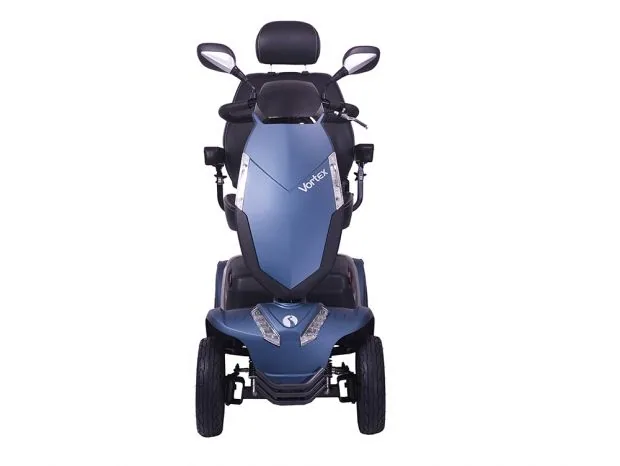
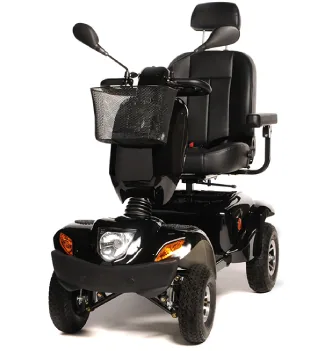
In the current range the 8 mph road scooters are the ones that need a V5C: the Rascal 850, Pioneer, Vecta Sport and Vision, the Sterling S425, S700, S800 and Elite 2, the Pride Colt Sport 2 and Baja Bandit, the Kymco Maxer 8, the Shoprider Cordoba and Traveso, the Roma Granada, the Freerider FR1, Kensington S2 and City Ranger 8, the Motion Healthcare Xcite, the Cabin Car Mk2 and the Monarch Storm+.
Then there is the test worth knowing, because it catches people out. A machine is not in a class at all if it can exceed 8 mph, is wider than 0.85 m, or weighs more than 150 kg. Anything in that bracket is road-only — no pavements, no cycle tracks — and needs both a driving licence and DVLA registration. Some high-performance and off-road machines sold in the UK have a private-land speed mode above 8 mph, the Invader being one example in this catalogue. Keep it to 8 mph on the road, or it is outside the class and outside the law.
Before you order
The buying guide on the support page covers the rest of the decision — Class 2 versus Class 3, range on a charge, kerb heights and whether it has to fit in a car boot — and it is worth five minutes before you pick a machine. The full range sits at mobility scooters, with the pavement-only machines clearly separated in the specs from the road scooters.
Delivery is a flat £45 per order to any UK address, including the Highlands and Islands, Northern Ireland, the Isle of Man, the Isles of Scilly and the Channel Islands, and takes 3–7 working days. Mobility scooters go by a specialist two-person courier who contacts you to arrange the delivery day and leaves the machine at the ground-floor threshold. Detail on delivery and shipping. Every new machine carries at least a 12-month manufacturer warranty, with Aero Sporty handling the claim — see warranty. If you are unsure whether the route you ride needs a Class 3, tell us the route and we will tell you straight.