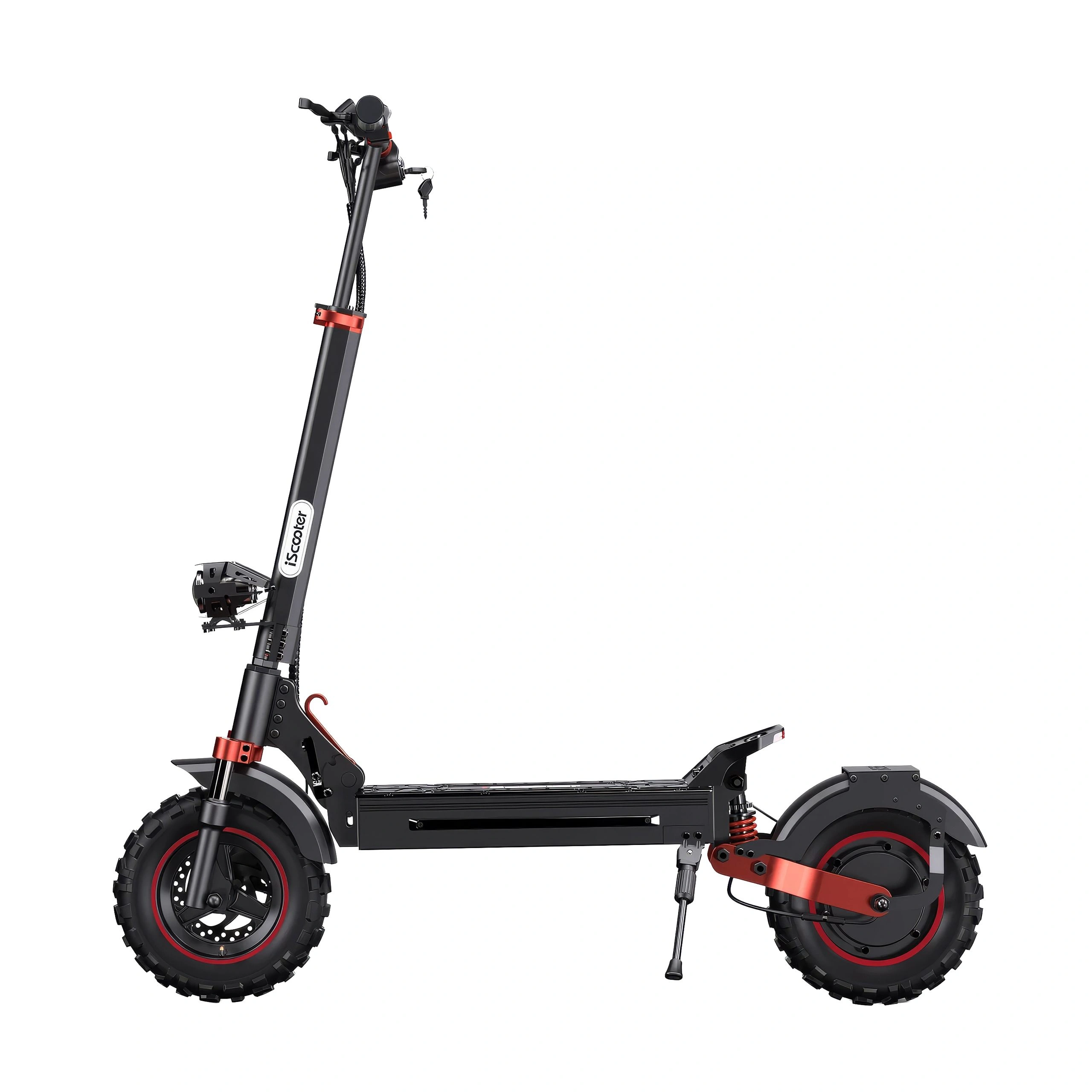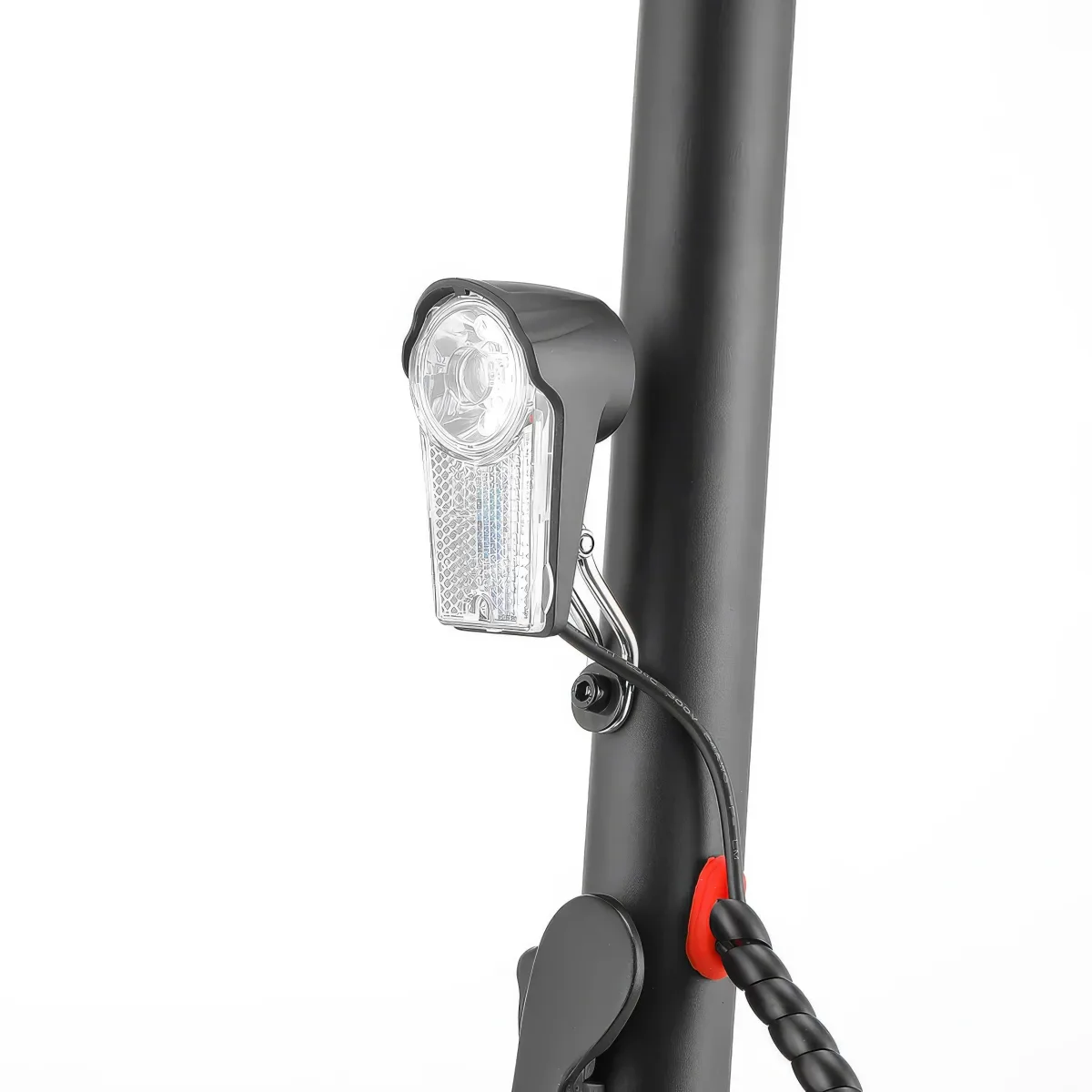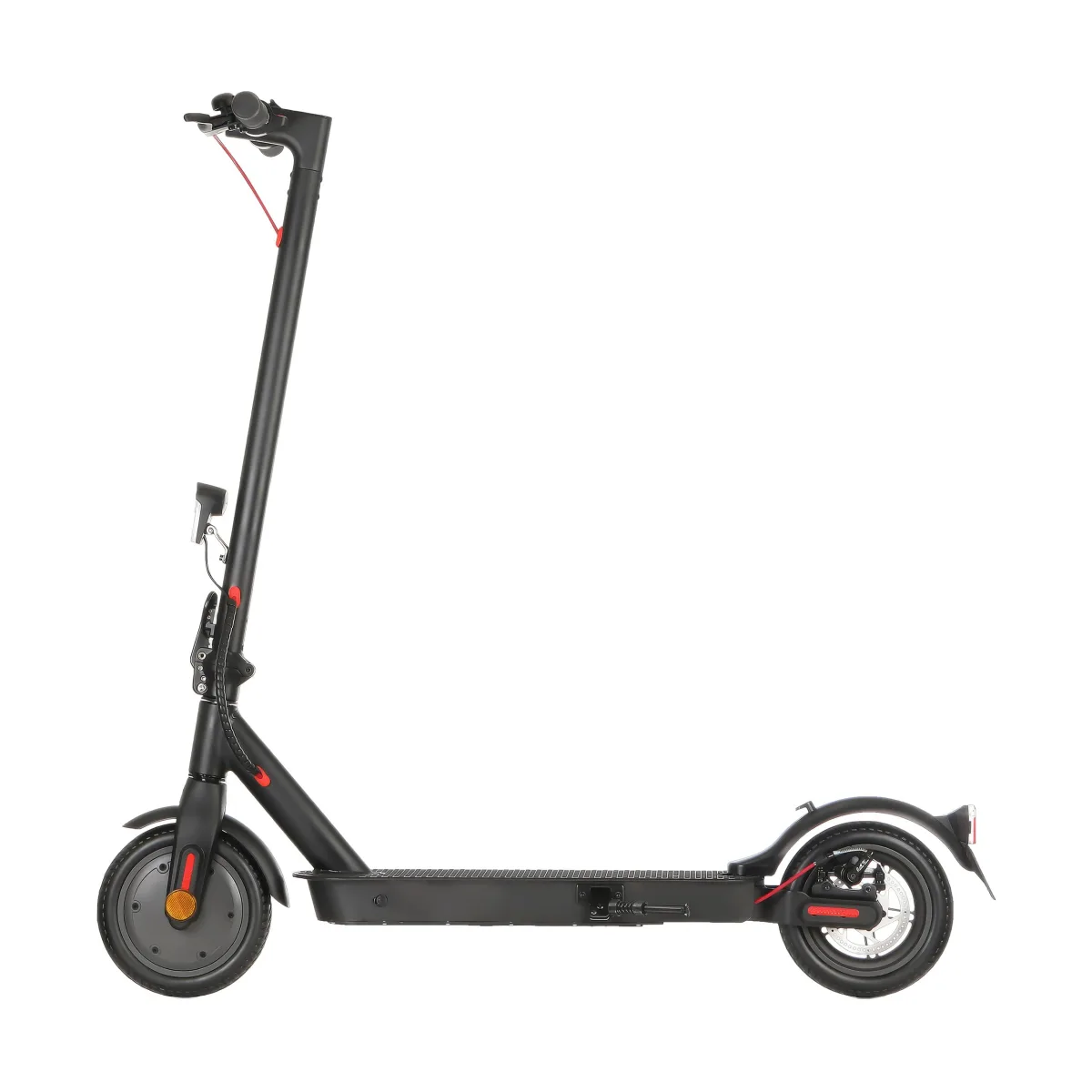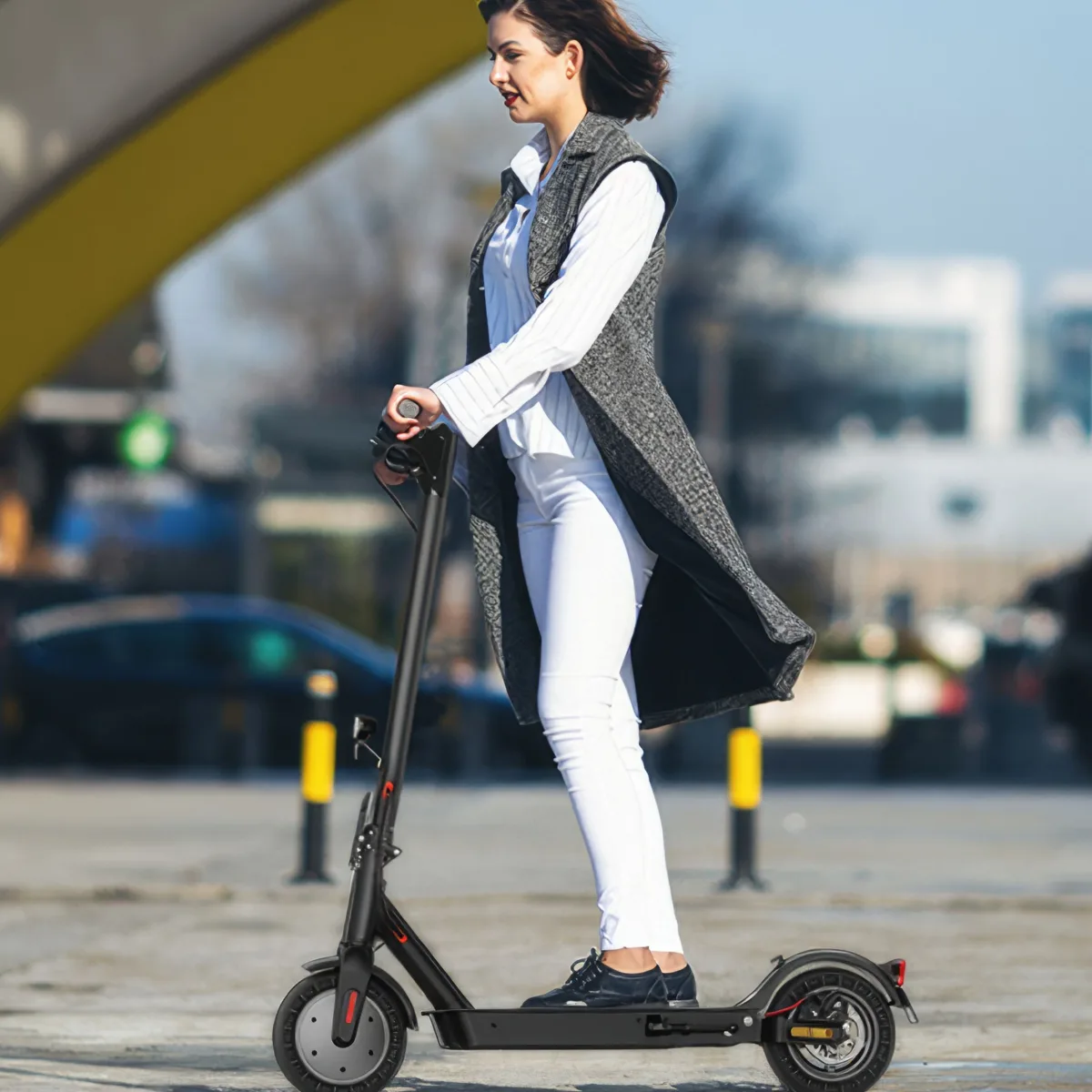
What a second motor actually does
A dual-motor e-scooter drives both wheels. It does not usually raise the top speed much, because top speed comes from the battery voltage and the controller limit. What it changes is how the scooter behaves under load:
- Pull from standstill. Two motors share the work, so the scooter gets moving up a gradient instead of bogging down.
- Grip on loose ground. A driven front wheel pulls while the rear pushes, which matters on gravel, wet grass and mud.
- Less heat per motor. A long climb on one motor works it hard. Split the load across two and each runs cooler. Long climbs in warm weather are where single-motor scooters are most likely to cut power as the motor heats up.
- Carrying weight. A heavier rider, a loaded rucksack or a long uphill route all ask more of the motor, and two motors answer it.
The cost of that is mechanical: two motors, two controllers, more wiring, more weight, and more to go wrong.
When two motors are worth paying for
Be honest about the ground you actually ride. Two motors earn their place when:
- your riding includes real gradients: a steep private track, a farm lane, a hill you climb every session;
- you are a heavier rider, or you carry kit, tools or shopping;
- the surface is loose: gravel, grass, mud, forest track;
- you ride off-road in winter, when one driven wheel spins and the other does nothing.
On flat, smooth ground a single-motor scooter is lighter, cheaper and easier to live with. If that is your riding, spend the difference on a bigger battery instead.
The trade-offs: weight, range and running cost
Weight
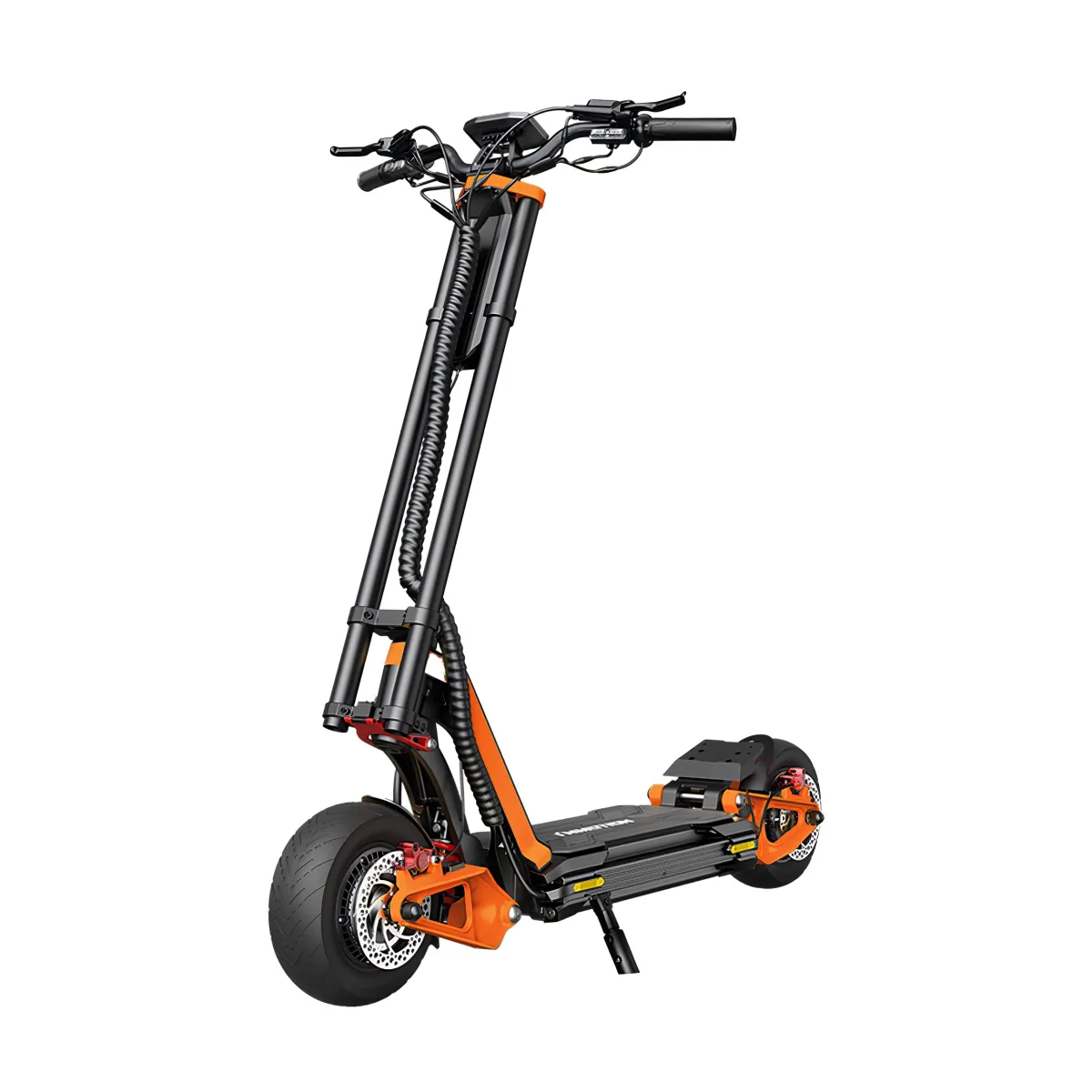
This is the one that catches people out. Single-motor commuters in the range sit around 20 to 25kg. Dual-motor machines climb quickly from there: the Kaabo Wolf Warrior X GT is about 38kg, the Wolf King GT Pro about 52kg, and the Teverun Fighter Supreme Ultra 2.0 about 63kg. That is a two-person lift, not a boot job.
Range
A second motor does not double the draw, because the power is shared. But dual-motor machines are heavier, they carry bigger controllers, and they are usually ridden harder, so expect less distance than a lighter single-motor scooter with the same battery. Every quoted range is a best case: light rider, flat ground, low speed, warm battery. Hills, cold weather and a heavy rider pull it down.
Compare batteries in watt-hours, not just amp-hours, because volts multiplied by amp-hours is the number that tells you how much energy is actually stored. A 60V 25Ah pack holds more than a 48V 25Ah one.
Running cost
Electricity is cheap either way, so the running cost per mile stays low next to petrol. A dual-motor machine costs more in three other places: the purchase price, consumables, since both tyres now wear under drive and both brakes do real work, and repairs, because two controllers and two motors are twice the diagnosis. If it has to go upstairs, you will also pay for that every single day.
The law does not care how many motors it has
Privately owned e-scooters cannot be used on UK public roads, cycle lanes or pavements. Not the slow ones, not the fast ones, not the dual-motor ones. The only lawful use is on private land with the landowner's permission. Government rental trial schemes in some cities are run by the operators licensed for them and say nothing about a machine you bought yourself.
That is why a dual-motor scooter is sold as an off-road and private-land machine. If you were hoping to commute on one, the honest answer is no. The machine that can legally do that commute is an EAPC e-bike. The full position is on are electric scooters legal in the UK.
Dual-motor machines in the Kaabo and Teverun ranges
Both brands build for hills and rough ground rather than the school run.
- Kaabo: the Mantis King GT is the trail-capable step up, the Wolf Warrior X GT and Wolf Warrior GT Pro add suspension travel and battery for long off-road sessions, and the Wolf King GT Pro and Wolf King GTR sit at the top with quoted top speeds of 62 to 65mph and kerb weights of 52 to 67kg. Those are competition-grade machines, not something to leave at the bottom of the stairs.
- Teverun: the Blade GT II and Fighter 11 2.0 are the sensible entry to dual drive at around 38 to 39kg, the Fighter Supreme Ultra 2.0 goes to about 63kg with 124 miles quoted range, and the Tetra runs four motors at 83kg.
If cost is the barrier, refurbished and outlet rides include dual-motor machines at a lower price, with 3 to 6 months' warranty stated on the product page.
Every new machine carries at least a 12-month manufacturer warranty and we handle the claim with the maker. Delivery is a flat £45 per order to any UK address, 3 to 7 working days, with the courier arranging the day on the larger machines. See delivery and shipping.
What to check before you spend
- Where it will live. Ground floor, level access, no stairs. A 60kg scooter in a first-floor flat is a mistake nobody repeats.
- How you will move it. Folding handlebars and a lifting point matter more than any number on the spec sheet once it is in a car boot.
- Battery in watt-hours. Amp-hours on their own tell you very little.
- Parts. We stock e-scooter spares. A machine you cannot get a tyre or a controller for is scrap in a year.
- Tyres and brakes. Pneumatic tyres and hydraulic or twin-disc brakes for rough ground, not solid tyres.
And read returns and refunds before you order, not after. The 14-day right to cancel gives you a full refund including delivery, and there is a 30-day change-of-mind window with a 25% restocking fee after day 14.